Youth agriculture initiative trains 837 people in Abuja
The Seyi Tinubu Operation Back to Agriculture Initiative says the programme is designed to equip young Nigerians with practical farming skills, encourage agribusiness and support national food production.
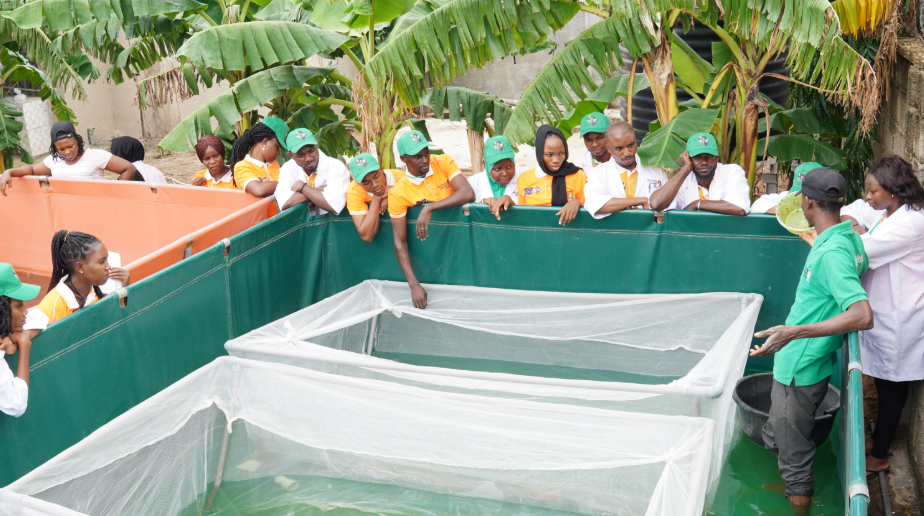
The Seyi Tinubu Operation Back to Agriculture Initiative (SOBAI) has trained 837 young people at its agricultural training centre in Kubwa, Abuja, as part of efforts to promote youth empowerment, create employment opportunities and strengthen Nigeria’s food security.
The beneficiaries completed the programme after 1,121 people registered for the Abuja training. The initiative says the graduates are now awaiting empowerment support to help them establish their own agricultural businesses.
The figures were disclosed by SOBAI’s National Coordinator, Emmanuel Bidi, during a training and induction ceremony held recently in the Federal Capital Territory.
According to reports published on October 28, 2026, the programme is intended to go beyond classroom instruction by preparing participants to build sustainable businesses, generate income and contribute to food production.
Training covers poultry, fish farming and livestock
The initiative focuses on practical agricultural activities that offer opportunities for young entrepreneurs to enter the sector.
Its training areas include poultry production, fish farming, goat rearing and other agricultural value chains. These activities can provide different entry points for young people, including those who may not have access to large areas of farmland.
SOBAI is working with Praise Agrovet to deliver its programmes. Bidi disclosed that the partnership has trained and empowered 64,734 young people since the initiative began operating across the Federal Capital Territory and five states: Nasarawa, Niger, Kogi, Benue and Kano.
The initiative believes that equipping young people with relevant agricultural knowledge can help make farming more attractive as a business opportunity.
However, the Abuja programme also highlights an important issue: completing training does not automatically mean participants can start operating profitable farms. Access to funding, equipment, land, quality inputs and technical guidance will be important in helping graduates turn their newly acquired skills into viable businesses.
SOBAI targets 20 million young Nigerians by 2030
SOBAI has announced an ambitious plan to reach 20 million Nigerian youths with agricultural training by 2030.
As part of that plan, the initiative intends to establish and activate 34 agricultural training centres across the country. It also plans to pursue accreditation for its programmes through the National Board for Technical Education (NBTE).
The organisation says it intends to sustain free agricultural training every quarter nationwide, giving more young people opportunities to acquire practical skills.
Another part of the plan involves establishing SOBAI-branded agricultural farms across Nigeria’s 36 states. According to Bidi, the proposed farms would serve as research, training and industrial attachment centres.
They are also expected to provide practical learning opportunities for members of the National Youth Service Corps (NYSC), alongside other aspiring agricultural entrepreneurs.
If implemented effectively, the proposed centres and farms could help expand access to agricultural education and create opportunities for young people interested in different areas of the food production industry.
Quality inputs remain important for agricultural growth
Beyond training, SOBAI has highlighted the need for quality animal feed, reliable veterinary products and competent personnel to improve livestock health and farm productivity.
These factors are particularly important for poultry and livestock businesses, where poor animal health and inadequate feeding can increase operating costs and reduce production.
For young farmers, access to dependable suppliers and professional agricultural advice can make a significant difference when starting and managing a business.
The initiative has called on government agencies, private-sector organisations, community leaders and youth groups to support agricultural education and entrepreneurship.
Its leadership believes that partnerships will be essential to expanding training opportunities and helping participants establish sustainable enterprises.
Questions remain over post-training support
While the completion of training by 837 participants represents a significant milestone for the Abuja programme, the next stage will be crucial.
The graduates are awaiting empowerment support to establish their agricultural businesses. Details of the scale, timing and structure of that support have not been fully disclosed in the reports.
The initiative’s long-term impact will therefore depend not only on the number of people trained but also on how many receive the resources and follow-up assistance needed to operate successfully.
Bidi also disclosed a political mobilisation target of five million votes for President Bola Tinubu ahead of the 2027 general election. He described the figure as a mobilisation target, not a guaranteed electoral outcome, and stressed that voting remains an individual choice.
For Nigeria’s agricultural sector, the broader challenge is turning youth interest and skills into productive businesses. If SOBAI can connect its graduates with practical support, markets and long-term guidance, the programme could contribute to employment creation and stronger domestic food production.
Follow AfriView
Don’t Miss the Next Big Story
Enjoyed this story? Stay connected with AfriView for the latest breaking news, trending stories and important updates from Nigeria, Africa and around the world.