Nigeria Expects Seven New Modular Refineries in 2027 as Domestic Oil Processing Capacity Expands
The proposed facilities are expected to contribute an additional 83,000 barrels per day, potentially strengthening local petroleum production as Nigeria adjusts to changing fuel demand and increased competition among domestic refiners.
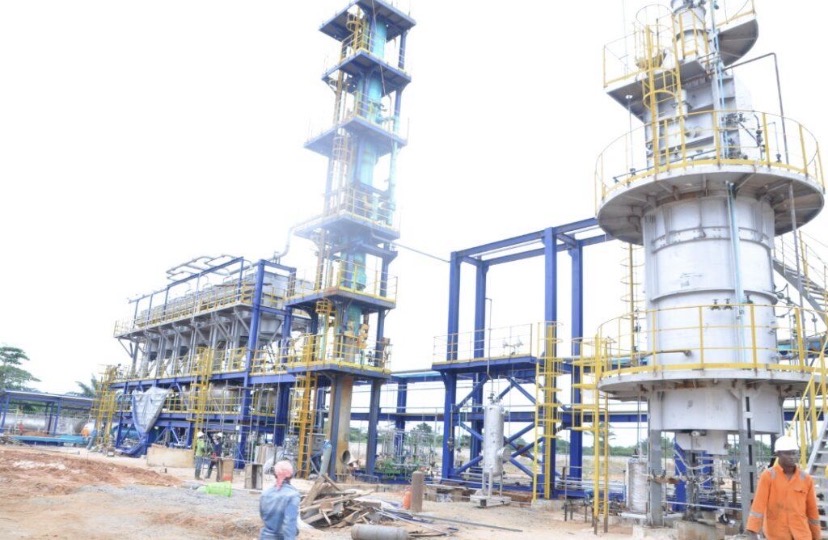
Nigeria’s petroleum refining industry is projected to receive a major boost in 2027, with seven additional modular refineries expected to begin operations and contribute a combined processing capacity of 83,000 barrels per day.
The projection was disclosed by George Maher-Bonnett of Argus Media during a presentation at the OTL Africa Downstream conference held in Lagos on Wednesday, October 28, 2026.
Speaking during the presentation, titled African Energy Outlook, Maher-Bonnett highlighted changes in Nigeria’s petroleum products market, particularly the growing contribution of domestic refining facilities and declining fuel demand.
According to the presentation, four modular refineries were operating in Nigeria as of September 2026, with a combined capacity of approximately 32,000 barrels per day.
The seven additional facilities expected to commence operations next year could significantly increase the contribution of smaller refineries to the country’s domestic petroleum supply.
Their projected combined capacity of 83,000 barrels per day would be more than two and a half times the existing capacity of the four operating modular refineries.
However, the presentation did not identify the seven proposed facilities, their owners or locations. It also did not provide individual capacity estimates or specific commissioning schedules.
The development comes as Nigeria continues efforts to reduce its dependence on imported refined petroleum products and strengthen local processing capacity.
For decades, the country has faced difficulties meeting domestic fuel demand despite being one of Africa’s major crude oil producers.
Operational challenges affecting state-owned refineries contributed to Nigeria’s dependence on imported petrol, diesel and other petroleum products.
The emergence of large private refining investments has begun changing the structure of the domestic market.
One of the most significant developments is the Dangote Petroleum Refinery in Lekki, Lagos, which has a designed processing capacity of 650,000 barrels per day.
The refinery has become an important part of Nigeria’s domestic refining strategy, with increased production expected to reduce the need for certain imported petroleum products.
Maher-Bonnett noted that the Dangote refinery was operating at a high rate, with steady petrol production contributing to improved domestic self-sufficiency.
The presentation also highlighted declining fuel demand in Nigeria during the year, attributing the development partly to higher pump prices.
This creates an important challenge for investors planning to establish additional refining facilities.
Although increased domestic refining capacity could reduce import dependence, individual facilities must still operate profitably in a market where demand, crude supply, production costs and distribution arrangements influence commercial performance.
Modular refineries are generally smaller than conventional large-scale facilities and can provide opportunities for investors to participate in domestic petroleum processing without necessarily developing infrastructure on the scale of major refineries.
Their operations could also support employment in host communities and create business opportunities in transportation, engineering, maintenance and petroleum distribution.
For oil-producing communities, the expansion of refining activities may provide additional opportunities for local economic participation, depending on where the facilities are located and how their operations are structured.
However, the expected expansion also raises questions about access to crude oil, financing, environmental compliance and the availability of reliable infrastructure.
Refineries require consistent crude supply and dependable electricity, transportation and storage systems to operate efficiently.
The proposed facilities will therefore need to demonstrate that they can secure sufficient feedstock, meet regulatory requirements and compete in an increasingly changing petroleum market.
Nigeria’s refining industry is also facing competition from developments in other West African countries.
Ghana’s Tema refinery, with a processing capacity of 45,000 barrels per day, is increasing its contribution to the country’s petroleum supply, creating additional competition within the regional market.
According to the Argus presentation, the growing availability of locally refined products is also weakening the commercial attractiveness of shipping certain petroleum products from Europe to West Africa.
This shift could have wider implications for international fuel suppliers and regional petroleum traders.
For Nigeria, the projected arrival of seven additional modular refineries presents an opportunity to deepen local processing capacity and strengthen the country’s position in the regional energy market.
Nevertheless, the announcement remains a projection rather than confirmation that all seven facilities have completed construction or secured operational approval.
The success of the anticipated expansion will ultimately depend on whether the projects receive the necessary investment, infrastructure and regulatory support to commence commercial operations in 2027.
As Nigeria continues to reshape its petroleum industry, the contribution of modular refineries could become increasingly important in determining how much of the country’s crude oil is processed locally and how effectively domestic demand is met.
Follow AfriView
Don’t Miss the Next Big Story
Enjoyed this story? Stay connected with AfriView for the latest breaking news, trending stories and important updates from Nigeria, Africa and around the world.