INEC Unveils New Security Framework to Prevent Violence Ahead of Nigeria’s 2027 Elections
The electoral commission is moving away from election-day security deployments towards an intelligence-led approach designed to identify threats early and protect voters, electoral workers and sensitive materials.
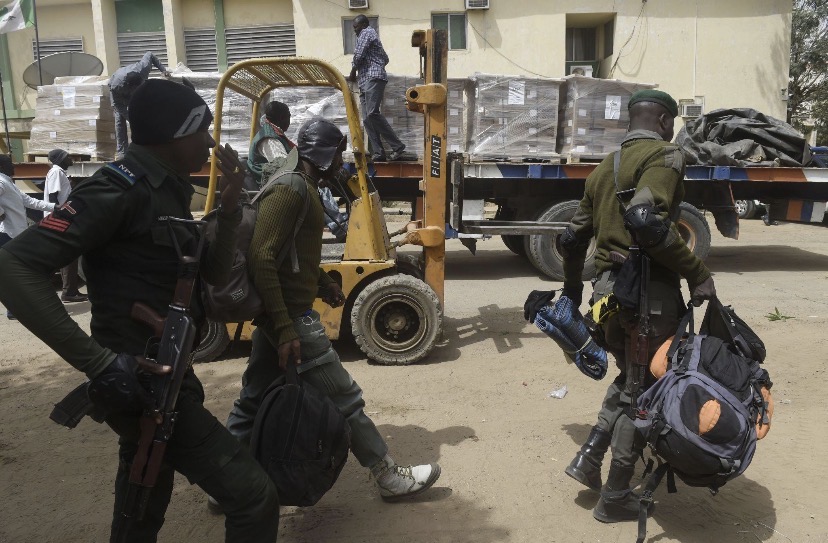
The Independent National Electoral Commission (INEC) has announced a new intelligence-led security framework aimed at preventing electoral violence and protecting voters, personnel and election materials ahead of Nigeria’s 2027 general elections.
The INEC Chairman, Professor Joash Amupitan, disclosed the development on Tuesday, October 27, 2026, during the commission’s North-East Zonal Interactive Meeting with Staff and Readiness Assessment for the 2027 General Election in Gombe State.
The new arrangement, described as the “ICCES Tentacle”, represents a shift from the traditional approach of deploying security personnel mainly around election periods to a system that focuses on identifying and addressing potential threats before voting begins.
According to Amupitan, the framework will strengthen collaboration between INEC and security agencies, including the Nigeria Police Force, Nigeria Security and Civil Defence Corps (NSCDC), Department of State Services (DSS), Armed Forces and other relevant paramilitary organisations.
The collaboration operates under the Inter-Agency Consultative Committee on Election Security (ICCES), which coordinates security arrangements for elections across the country.
Under the new structure, security coordination will extend beyond national and state headquarters to Local Government Areas and Registration Area Centres, allowing security agencies to respond more effectively to threats within communities.
Amupitan explained that the framework would operate through three major pillars: “Map and Mitigate”, “Ensure Safety” and “Guarantee Access”.
The first pillar, Map and Mitigate, will involve using Electoral Risk Management tools to identify areas vulnerable to violence, seasonal security challenges and other local threats. The information gathered is expected to guide security agencies in planning preventive operations before sensitive election materials are distributed.
The second pillar, Ensure Safety, focuses on protecting electoral personnel, voters and the technological infrastructure required for the elections. This includes the Bimodal Voter Accreditation System (BVAS) devices and other server infrastructure used in the electoral process.
The third pillar, Guarantee Access, is designed to ensure that all 176,846 polling units across Nigeria remain safe and accessible to voters, regardless of their geographical location or previous security challenges.
The INEC chairman maintained that the credibility of an election cannot be guaranteed if voters, observers and electoral personnel are exposed to intimidation, threats or physical violence.
He also revealed that intelligence-sharing between security agencies had already helped uncover an alleged plot by criminal kingpins targeting INEC’s ad hoc staff and members of the National Youth Service Corps (NYSC).
According to him, joint operations led by the DSS successfully neutralised the threat, while the principal suspects were arrested and are undergoing prosecution.
He warned that anyone who threatens or harms electoral personnel would be pursued and brought to justice.
The commission also announced plans to organise a National Election Security Conference in Abuja, where security protocols for states and areas considered particularly vulnerable to electoral violence would be discussed and finalised.
The development comes as Nigeria prepares for another general election cycle amid longstanding concerns about political intimidation, voter suppression, violence and the safety of election officials.
Electoral violence has remained a major challenge in the country’s democratic process, with security concerns sometimes discouraging citizens from participating in elections. Attacks on electoral facilities, intimidation of voters and clashes involving political supporters have also raised questions about the protection of democratic rights.
For the 2027 elections, the commission faces the responsibility of ensuring that security arrangements are effective across all 36 states and the Federal Capital Territory.
The presidential and National Assembly elections are scheduled for January 16, 2027, while governorship and State Houses of Assembly elections are expected to hold on February 6, 2027.
The North-East region presents additional operational challenges because of its vast geographical terrain, remote communities and existing security concerns. The region has approximately 13.96 million registered voters, representing 13.51 per cent of Nigeria’s national voter register.
While the announcement signals a stronger approach to election security, the effectiveness of the framework will depend on its implementation, coordination between agencies and the willingness of security personnel to remain professional and politically neutral.
The commission will also need to ensure that voters in rural and conflict-affected communities receive adequate protection and are not prevented from exercising their constitutional rights.
As preparations continue, attention will increasingly turn towards whether the new security arrangement can translate into safer polling environments and greater public confidence in Nigeria’s electoral process.
Follow AfriView
Don’t Miss the Next Big Story
Enjoyed this story? Stay connected with AfriView for the latest breaking news, trending stories and important updates from Nigeria, Africa and around the world.