Uganda Wants to Turn Avocado Waste Into Animal Feed. Could It Cut Farmers’ Costs?
A new research project is testing whether discarded avocado residue can produce animal feed and organic fertiliser, potentially creating another source of income for farmers.
What if the waste left behind after processing avocados could help feed chickens and improve farmland instead of becoming an environmental problem?
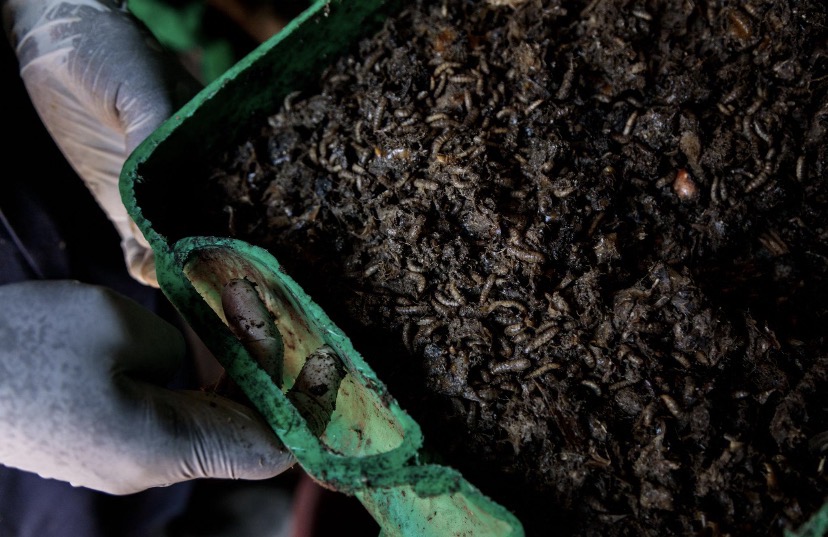
That is the idea behind a new agricultural research project in Uganda, where scientists are exploring the use of black soldier fly larvae to convert avocado-processing residue into useful farming products.
The initiative, launched by the National Forestry Resources Research Institute (NaFORRI), targets organic waste generated by factories extracting oil from avocados. Rather than treating the residue as something to discard, researchers want to determine whether it can support insect production for animal feed and generate material that can be processed into organic fertiliser.
The project presents a potential opportunity for agricultural businesses, livestock farmers and communities seeking additional ways to earn from materials that would otherwise go unused.
The insect at the centre of the idea
Black soldier fly larvae feed on suitable organic material and can convert it into biomass containing protein and other nutrients. When raised under controlled conditions, the larvae can be processed for use as an ingredient in poultry and other animal feeds.
The system also produces a residue known as frass, which can be processed and evaluated for use as a soil amendment or fertiliser.
For Uganda, the proposed approach connects two agricultural challenges: managing waste from food processing and finding more affordable ingredients for animal feed.
The research project is expected to investigate the nutritional value and growth performance of larvae raised on avocado-processing residue. Researchers also plan to assess the resulting fertiliser and its potential use in growing crops and seedlings.
These tests matter because not every organic waste material is suitable for every purpose. Its composition, safety and effect on the insects must be established before the resulting products can be recommended for wider agricultural use.
Could this become a business for farmers?
If the research produces reliable results, the model could create opportunities for entrepreneurs who collect suitable organic waste, rear the larvae, process them and supply feed producers. Food-processing businesses could also benefit from having another possible use for their residue, while farmers may gain access to alternative feed ingredients and soil inputs.
The project brings together research institutions, environmental authorities, local governments and private-sector partners. Its planned intervention areas include avocado-processing hubs in Kyegegwa, Buikwe, Nakaseke and Kamuli districts.
Farmers and businesses would still need to consider the cost of equipment, labour, waste collection, processing, quality control and distribution. The finished feed would also need to meet relevant safety and nutritional requirements before being used at scale.
Researchers will need to establish the appropriate production methods and demonstrate that the final products perform reliably under practical farming conditions.
If successful, the approach could help turn an agricultural by-product into another source of value. It could also offer a model for investigating other types of organic waste generated by food-processing industries.
For now, the project is a research-backed opportunity rather than proof that farmers are already benefiting from cheaper feed nationwide. Its eventual impact will depend on the results, costs and ability of businesses to adopt the technology.
Follow AfriView
Don’t Miss the Next Big Story
Enjoyed this story? Stay connected with AfriView for the latest breaking news, trending stories and important updates from Nigeria, Africa and around the world.