Nigeria's 2027 Elections Face Accessibility Test as Persons With Disabilities Confront Voting Barriers
Despite legal protections and INEC's efforts to promote inclusive elections, inaccessible polling units, inadequate assistive materials and communication barriers continue to threaten the voting rights of millions of Nigerians.
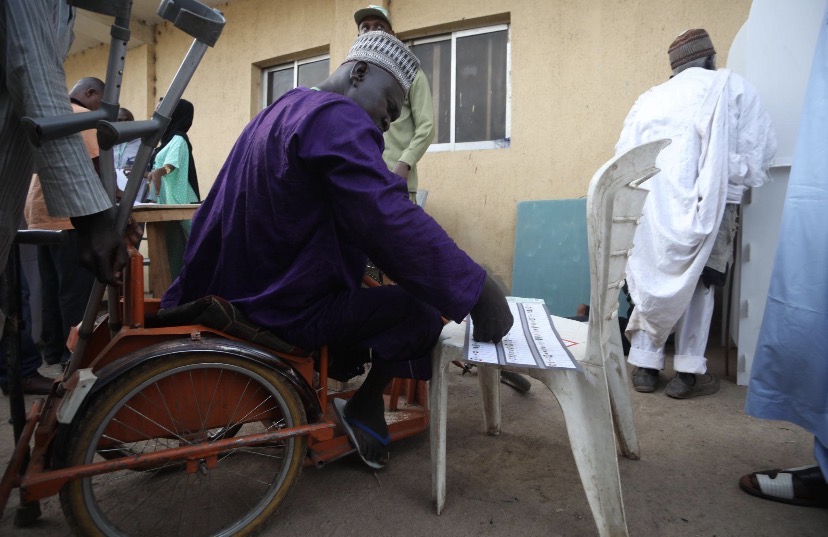
As Nigeria prepares for the 2027 general elections, concerns are growing over the ability of persons with disabilities (PWDs) to participate fully in the country’s electoral process.
Although Nigeria has introduced legal provisions and initiatives aimed at improving electoral accessibility, many eligible voters living with disabilities continue to encounter obstacles that make voting difficult, uncomfortable or, in some cases, impossible.
The challenges extend beyond physically reaching polling stations. They include inadequate voting materials, communication difficulties, inaccessible infrastructure and the inability to cast ballots independently while maintaining voting privacy.
A report published by The Guardian on November 7 highlights the experiences of Nigerians with disabilities and raises questions about whether existing electoral arrangements are sufficient to guarantee equal participation in the 2027 elections.
Beyond getting to the polling unit
For many Nigerians, voting involves registering, locating their polling units and joining the queue on election day. However, for persons with disabilities, the process can involve additional challenges at almost every stage.
Visually impaired voters may struggle to identify ballot options without appropriate Braille guides or assistance. Deaf voters may encounter communication difficulties when election officials cannot communicate through sign language, while wheelchair users and people with other physical disabilities may face inaccessible polling environments.
Long queues can also create additional difficulties for voters whose disabilities affect their ability to stand for extended periods.
The report featured the experience of Kemi Odusanya, a visually impaired Nigerian who voted during the 2019 general elections but identified the absence of Braille ballot papers as a potential challenge for other visually impaired voters.
Another interviewee, Sussan Kelechi Ihuoma, described the difficulties she experienced reaching her polling unit and navigating the voting environment.
These experiences demonstrate that the right to vote does not automatically translate into the ability to exercise that right independently.
What does the law provide?
Nigeria’s Electoral Act 2022 contains provisions intended to support the participation of persons with disabilities and other vulnerable voters.
Section 54 requires the Independent National Electoral Commission (INEC) to take reasonable steps to assist persons with disabilities and other voters who may require additional support.
The provisions include arrangements for accessible voting materials, such as Braille and large-print guides, as well as other assistive measures.
INEC has also developed disability-inclusion structures and frameworks to improve accessibility during elections.
However, the existence of these policies does not necessarily mean that every polling unit is adequately equipped to accommodate voters with different disabilities.
The numbers reveal another problem
Findings from electoral observation during the 2023 general elections highlight the difference between physical accessibility and meaningful electoral inclusion.
According to figures cited in the Guardian report from TAF Africa’s observation of 273 polling units, approximately 86 per cent were physically accessible.
However, Braille ballot guides were available in only 26 polling units, representing approximately 9.5 per cent of the locations observed.
Magnifying glasses were available in 60 polling units, while large-font posters were present in 90.
The figures suggest that while progress has been made in improving physical access, the availability of materials that enable voters with visual impairments to participate independently remains limited.
The report also notes that TAF Africa estimates Nigeria’s population of persons with disabilities at approximately 19 million, highlighting the scale of the population potentially affected by these challenges.
What needs to change before 2027?
As preparations for the next general elections continue, disability advocates are calling for more comprehensive approaches to electoral inclusion.
This includes improving polling-unit accessibility, providing appropriate assistive voting materials, training election officials in disability-sensitive communication and strengthening collaboration with organisations representing persons with disabilities.
There is also a need for better data collection to understand how many eligible voters with disabilities are registered, how many participate in elections and what prevents others from voting.
Security arrangements must equally consider the needs of voters who may depend on caregivers, drivers or family members to reach polling units.
Ultimately, an inclusive electoral system should not merely allow persons with disabilities to enter polling stations. It should guarantee that they can understand the voting process, make independent choices and cast their ballots privately.
As Nigeria approaches another general election, the question is no longer simply whether persons with disabilities have the legal right to vote, but whether the country is prepared to make that right accessible to everyone.
Follow AfriView
Don’t Miss the Next Big Story
Enjoyed this story? Stay connected with AfriView for the latest breaking news, trending stories and important updates from Nigeria, Africa and around the world.