Nigeria develops a climate-finance framework for smallholder farmers
The proposed framework aims to attract investment for farmers facing droughts, floods and other climate threats, with experts recommending tailored loans, insurance and stronger financial accountability.
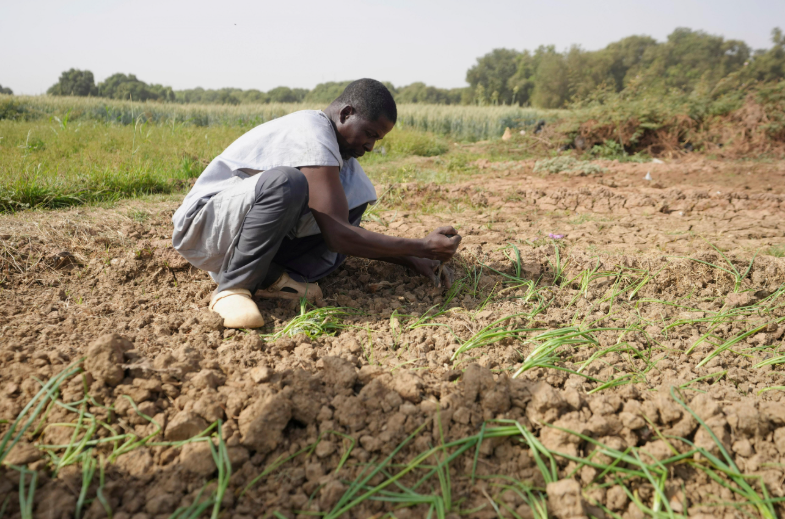
Nigeria is developing a climate-finance framework designed to improve access to funding for smallholder farmers affected by drought, flooding and other climate-related challenges.
The initiative is expected to help direct investment towards agricultural activities that strengthen resilience, protect rural livelihoods and support food production. It is also intended to give banks and other financial institutions clearer guidance on which agricultural projects qualify for climate-related financing.
The development was discussed at a Taxonomy Validation Workshop on Adaptation and Resilience Solutions in Abuja, organised by the Presidential Implementation Committee on Technology Transfer (PICTT) in collaboration with YAPU Solutions.
PICTT Chairman, Dr Dahiru Muhammed, said the workshop was focused on developing an implementation framework for Nigeria's national climate taxonomy, which identifies activities eligible for climate finance.
The Federal Ministry of Finance and the United Nations Development Programme (UNDP) are working on the national taxonomy, while PICTT and its partners are concentrating on making it operational and accessible to rural communities.
Muhammed explained that defining what qualifies as climate adaptation or resilience is essential because farmers and businesses need to demonstrate that their activities meet the requirements before accessing eligible financing.
He clarified that the financing requirements had not yet been fully assessed and that stakeholders were still developing the framework and identifying implementation partners.
Climate risks differ across Nigeria
One of the major issues driving the proposed framework is that farmers across Nigeria face different environmental challenges.
In northern Nigeria, drought and changing rainfall patterns threaten agricultural production. In southern communities, flooding and waterlogging can destroy crops, damage farmland and disrupt farming activities.
Country Representative of WorldFish in Nigeria, Dr Charles Nyangbe, said these differences require financing arrangements that reflect the specific climate risks affecting farmers in different regions.
A farmer seeking support for drought-resistant seeds or irrigation may need a different financial product from a fish farmer whose ponds and facilities are exposed to flooding.
Nyangbe argued that a uniform financing approach would not adequately address the range of challenges confronting agricultural producers.
He also called for greater attention to livestock, fisheries and aquaculture, noting that climate-finance discussions often focus heavily on crop production despite the risks facing other agricultural sectors.
Experts propose insurance and blended finance
Stakeholders at the workshop recommended financial instruments that could reduce the risks associated with lending to farmers.
One proposal is index-based insurance, which uses measurable indicators such as rainfall or temperature to determine when compensation should be paid. This can help farmers manage losses linked to extreme weather conditions.
Another recommendation is blended finance, which combines public or concessional funding with private investment to make projects more attractive to commercial lenders.
Nyangbe also urged the government to establish a dedicated pool of climate-finance resources and channel the money through commercial banks and other financial institutions.
Under this approach, public funds could serve as guarantees to encourage banks to lend to farmers and agricultural businesses that might otherwise struggle to secure financing.
Nigeria has reportedly attracted approximately $2.5 billion in climate-related financing, but Nyangbe said this remains significantly below the country's estimated requirements.
$30 billion annual investment opportunity identified
Managing Director of YAPU Solutions, Christoph Junghleisch, estimated that climate adaptation could represent an investment opportunity of up to $30 billion annually for smallholder farmers.
He said initial plans could involve a pilot programme valued between $100 million and $200 million, with an ambition to scale financing to $1 billion during the first expansion phase.
However, these figures are proposed targets, not confirmed funding commitments. The framework is still being developed, and stakeholders have not announced a final funding package or a confirmed disbursement timetable.
YAPU Solutions is working with PICTT to connect climate-adaptation activities with appropriate financing sources. The organisation is also engaging potential development-finance partners, including the Bank of Agriculture and the African Development Fund, while exploring private-sector investment.
Junghleisch said digital technology would be central to the proposed system. Digital records and monitoring tools could help stakeholders track how much money is committed, where it goes and whether it reaches the intended farmers.
Such accountability measures would be important in building confidence among investors, financial institutions and beneficiaries.
Earlier partnership lays groundwork for climate-resilient lending
The framework also builds on wider efforts to strengthen agricultural finance in Nigeria.
In September 2026, the National Agricultural Development Fund (NADF) signed a memorandum of understanding with YAPU Solutions GmbH, a German climate-fintech company.
The partnership is intended to strengthen climate-risk assessment and develop financing mechanisms that help smallholder farmers respond to environmental challenges.
Its areas of collaboration include climate-risk analytics, data infrastructure, capacity building, operational frameworks and potential pilot projects. The partners are also exploring financial products designed around the climate risks affecting agricultural production.
The agreement provides a foundation for developing more informed lending decisions, particularly where financial institutions need better information about the risks farmers face and the investments that could help them adapt.
Implementation will determine the framework's impact
Although the proposed framework could create new opportunities for smallholder farmers, its success will depend on how effectively it moves from planning to actual financing.
Farmers will need accessible application processes, affordable financial products and practical guidance on qualifying climate-resilient investments. Banks will also need clear rules, reliable data and risk-sharing arrangements that make lending to small agricultural businesses more attractive.
Coordination among federal, state and local governments will be important, particularly in addressing flooding through better infrastructure and preventive measures.
The framework must also ensure that financing reaches rural communities, women farmers and agricultural businesses that often face difficulties accessing formal credit.
For now, Nigeria is still developing the mechanisms required to mobilise the proposed investment. The $100 million to $200 million pilot and the $1 billion expansion ambition remain targets rather than money already approved for distribution.
If the framework produces workable financial products and transparent delivery systems, it could help farmers invest in irrigation, climate-resilient production, insurance and other measures that protect their livelihoods.
Ultimately, the test will not simply be how much climate finance Nigeria attracts, but whether smallholder farmers can access and use that money to withstand climate shocks and maintain productive farms.
Follow AfriView
Don’t Miss the Next Big Story
Enjoyed this story? Stay connected with AfriView for the latest breaking news, trending stories and important updates from Nigeria, Africa and around the world.