Experts warn that more fertiliser does not automatically mean higher yields
Nigerian agricultural researchers are urging farmers to adopt soil testing and crop-specific nutrient recommendations, warning that excessive fertiliser use can increase production costs without improving harvests.
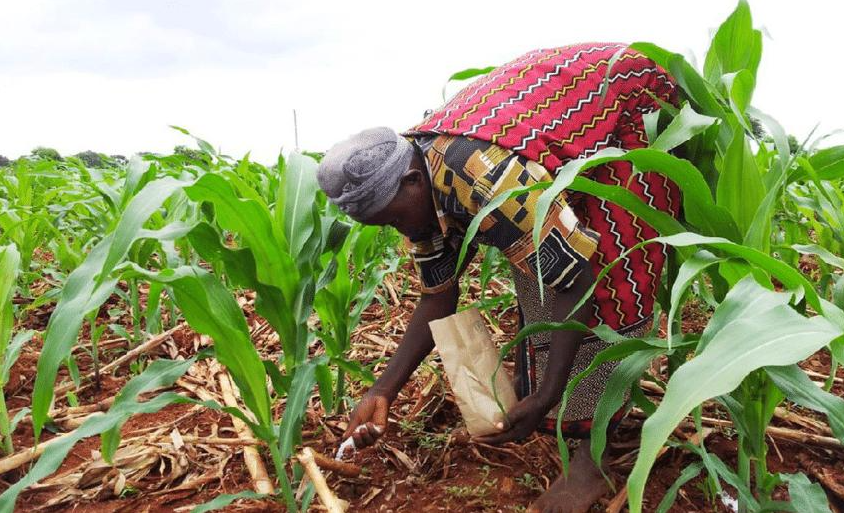
Agricultural experts in Nigeria have warned farmers against assuming that applying more fertiliser will automatically lead to higher crop yields, stressing that the right type and quantity of nutrients must be determined by soil conditions and crop requirements.
The warning followed discussions at the 2026 Nigeria Fertiliser Summit in Abuja, where researchers, policymakers, fertiliser manufacturers, regulators and farmers' representatives called for more scientific approaches to soil management.
Participants said indiscriminate fertiliser application could increase farmers' production expenses without delivering corresponding improvements in crop performance. They recommended wider access to soil testing, reliable agricultural advice and fertiliser formulations suited to local farming conditions.
The summit, themed “Phosphorus and Food Security: Challenges in Food Production Systems in Nigeria,” was organised by the Institute of Agricultural Research and Training (IAR&T), Obafemi Awolowo University, in partnership with the Fertiliser Producers and Suppliers Association of Nigeria (FEPSAN) and the Federal Ministry of Agriculture and Food Security.
Soil conditions determine fertiliser needs
One of the major issues raised at the summit was the difference in nutrient requirements between farms, even when they are located within the same broad geographical area.
Evidence presented by the Regional Hub for Fertilizer and Soil Health for West Africa and the Sahel showed that phosphorus requirements for maize and rice could range from zero to more than 60 kilogrammes of phosphorus pentoxide (P₂O₅) per hectare within the same target area in northern Nigeria.
The findings were based on the Hub's 2025 site-specific nutrient recommendations.
This variation demonstrates why applying the same fertiliser quantity to every farm can be ineffective. While one field may require additional phosphorus to support healthy crop development, another may already have sufficient levels.
Phosphorus is an important plant nutrient that supports root development, crop growth and grain formation. However, applying too little can restrict productivity, while applying more than the crop needs can waste money and reduce fertiliser-use efficiency.
Senior Agronomist at the Regional Hub, Dr Bello Muhammad Shehu, said the priority should be understanding what different soils and crops require and ensuring farmers receive appropriate products and reliable advice.
Excess fertiliser can increase farming costs
For many Nigerian smallholder farmers, fertiliser is already a significant production expense. Increasing application without understanding the soil's nutrient composition can place additional pressure on already limited resources.
The World Bank has also highlighted the economic limitations of simply increasing inorganic fertiliser use in Nigeria.
Its research on fertiliser profitability in maize production found that additional nitrogen application can produce relatively small increases in output at the margin. High transport costs and other production expenses can further reduce the profitability of fertiliser use.
The research suggests that better farming practices, improved access to complementary inputs and lower transport costs can make fertiliser use more economically beneficial.
This means farmers must consider not only how much fertiliser they apply but also whether the additional expenditure is likely to generate enough extra produce to justify the cost.
Experts recommend soil testing and balanced nutrient management
Experts at the summit identified soil testing as an important step towards improving fertiliser efficiency.
Testing helps establish which nutrients are already present in the soil and which ones may be lacking. Farmers can then make more informed decisions about the type, quantity and timing of fertiliser application.
Professor Vincent Aduramigba-Modupe, a soil scientist and modelling expert at IAR&T, emphasised that farmers need recommendations that reflect their specific soil conditions and crop requirements.
Professor Jibrin Mohammed, a visiting scientist with the Regional Hub and a soil science professor at Bayero University, Kano, also stressed the importance of reliable soil information. He said healthy soil and better understanding of its characteristics are fundamental to sustainable food production.
Participants pointed to digital soil maps, laboratory testing and digital advisory services as tools that could help farmers make better decisions. Artificial intelligence and other technologies may also support the collection and interpretation of soil information, making recommendations more precise and accessible.
Federal Government plans wider soil-testing access
The Federal Government has also identified soil testing as part of its strategy to improve agricultural productivity.
Minister of State for Agriculture and Food Security, Senator Aliyu Sabi Abdullahi, disclosed that the government was working to expand soil-testing services across all 774 local government areas in Nigeria.
The plan is linked to the Nigerian Farmers' Soil Health Scheme, which is intended to provide farmers with soil-specific information and fertiliser recommendations.
The government has identified the need for more laboratory facilities, qualified personnel, quality assurance and stronger agricultural extension services to support the programme.
Expanding access to these services could help farmers understand their land better and reduce wasteful spending on unsuitable fertiliser applications. However, the success of the plan will depend on sustained funding, effective coordination and making testing services affordable and accessible to rural farming communities.
Better fertiliser decisions could strengthen food security
Nigeria continues to face the challenge of increasing food production while keeping farming costs manageable. Experts believe improving the way fertiliser is used could help address both concerns.
Rather than focusing only on increasing the volume of fertiliser distributed or applied, agricultural policies need to prioritise soil health, quality inputs, crop-specific recommendations and practical support for farmers.
Farmers also need stronger extension services to explain how to interpret soil-test results and apply fertiliser correctly. Access to improved seeds, water management, suitable farming equipment and reliable markets will remain important parts of the productivity equation.
The message from the Abuja summit is clear: fertiliser remains essential to crop production, but using more of it is not necessarily the answer. Understanding the soil, identifying crop nutrient needs and applying the right amount at the right time may deliver better results for farmers and the country's food system.
Follow AfriView
Don’t Miss the Next Big Story
Enjoyed this story? Stay connected with AfriView for the latest breaking news, trending stories and important updates from Nigeria, Africa and around the world.