SERAP Sues Federal Government Over Alleged ₦78.8 Billion Cash-Transfer Irregularities
The civil society organisation is asking the ECOWAS Court to order an investigation and a verifiable account of funds allocated to social-protection programmes.
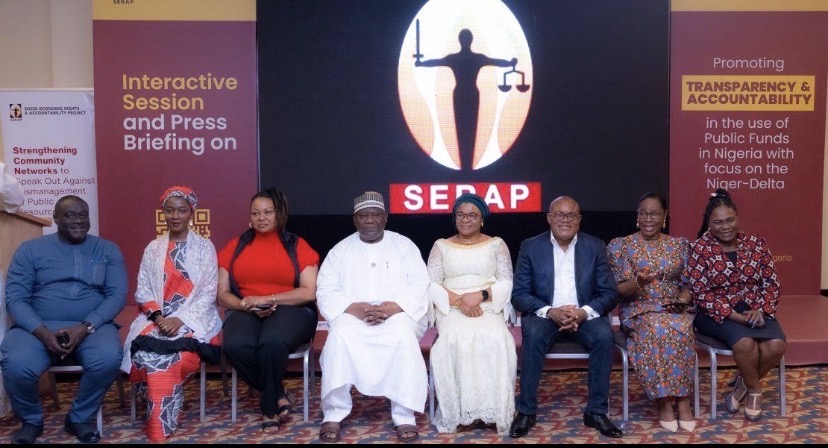
The Socio Economic Rights and Accountability Project (SERAP) has filed a lawsuit against the Nigerian government at the ECOWAS Community Court of Justice over alleged financial irregularities involving more than ₦78.8 billion allocated to federal cash transfer and social protection programmes.
SERAP is asking the regional court to direct the government to account for the questioned funds, investigate the reported irregularities and strengthen financial controls governing social protection programmes.
The case names federal institutions associated with the administration and coordination of cash-transfer schemes, including the Ministry of Humanitarian Affairs and Poverty Reduction, the National Cash Transfer Office and the National Social Safety Nets Coordinating Office.
The allegations have not been established as findings of criminal liability by a court. The lawsuit seeks legal remedies and accountability in response to the audit.
What does the lawsuit concern?
According to SERAP’s account of the Auditor-General’s findings, the questioned funds relate to multiple aspects of cash transfer and social protection spending between January 2023 and December 2024.
The organisation says the audit identified approximately ₦33.751 billion reportedly transferred to more than 3.2 million households across 35 states in 2023, for which adequate records were allegedly not provided to verify payments and reconcile beneficiary information.
The reported findings also included ₦36.744 billion in payments made without prepayment audits and ₦4.616 billion in unsupported expenditure.
Additional questioned payments reportedly included ₦350.182 million for enrolment, ₦89.511 million for store purchases and ₦17.422 million in diesel advances.
These figures form part of the audit concerns cited in the legal action. Their inclusion in the lawsuit does not automatically establish that the money was stolen, diverted or received by unauthorised individuals.
An audit query may identify missing documents, inadequate controls, unsupported expenditure or a failure to reconcile accounts. Establishing whether these problems resulted from administrative failures, improper payments or criminal conduct requires further examination of the records and, where appropriate, investigation.
That distinction is important because accountability requires both transparency about public spending and evidence based conclusions about wrongdoing.
Why cash transfer programmes matter
Cash transfer programmes are designed to provide financial assistance to eligible households facing economic vulnerability.
Depending on the programme’s design, payments can help families purchase food, pay for transport, meet basic household expenses or manage temporary financial shocks.
SERAP says the programmes involved in the case were intended to benefit more than 3.2 million households across 35 states.
When programmes of this scale are poorly administered, the consequences can extend beyond accounting discrepancies. Weak beneficiary verification may create uncertainty about whether payments reached the intended recipients. Inadequate documentation can make it difficult to determine which households received support, when payments were made and whether public funds were used as authorised.
However, a missing record does not by itself prove that a household did not receive money, just as evidence of a payment does not by itself establish that every aspect of the transaction complied with financial rules.
The central issue is whether the government can provide a reliable, auditable account of the money and demonstrate that the programme operated according to its rules.
What SERAP wants the court to order
SERAP is seeking several forms of relief from the ECOWAS Community Court of Justice.
First, it wants the court to declare that failure to investigate and remedy the financial irregularities identified in the Auditor-General’s report, where those failures impair access to intended benefits, violates Nigeria’s international human-rights obligations.
Second, the organisation is asking for a comprehensive and verifiable account of the questioned funds, including relevant payment records, beneficiary information, verification documents and reconciliation records.
Third, it wants an independent and effective investigation into the identified irregularities, along with recovery of funds improperly spent, diverted or lost where such findings are established.
The organisation is also seeking stronger auditing, beneficiary verification, financial reconciliation and oversight mechanisms to prevent similar problems in future programmes.
Finally, SERAP wants effective measures to ensure eligible vulnerable households receive the benefits intended for them and that adverse effects on their protected rights are appropriately addressed.
The court has not yet determined the merits of the case. The filing represents the organisation’s legal position and requested remedies, not a final judgment against the government.
The government’s accountability obligations
Nigeria’s public-finance system depends on institutions that authorise expenditure, maintain records, audit transactions and respond to identified irregularities.
The Auditor-General’s reports form part of that accountability framework. Their purpose is not merely to identify weaknesses after money has been spent, but to provide a basis for corrective action, improved controls and appropriate investigation where necessary.
For the government, responding effectively would involve examining the specific transactions questioned by the auditor, producing the available documentation, explaining any discrepancies and establishing whether funds were properly disbursed.
Where records are incomplete, authorities would need to explain the gaps and determine whether the relevant payments can be independently verified.
Where improper expenditure is established, appropriate steps may include recovery, disciplinary action or referral for further investigation, depending on the facts and applicable law.
Public communication should also distinguish between money that is genuinely unaccounted for, money whose supporting documentation is inadequate, and money proven to have been diverted. These are not identical categories.
Such distinctions matter for public trust and for protecting the rights of both intended beneficiaries and individuals or institutions implicated in allegations.
The case has been filed at the ECOWAS Community Court of Justice under suit number ECW/CCJ/APP/42/26, according to the published account. No hearing date had been fixed in the report.
The next stages will depend on the court’s procedures, including the government’s response and any subsequent directions from the court.
The case places renewed attention on how public funds intended for vulnerable households are recorded, disbursed and audited. It also raises questions about how quickly authorities respond when an audit identifies potentially significant weaknesses.
Ultimately, the public interest lies in establishing what happened to the questioned funds, whether eligible households received their intended support and whether the financial controls governing future payments are adequate.
Those questions require verifiable records, a fair process and evidence-based findings. The lawsuit is a step in seeking those answers, but the final legal conclusions remain for the court to determine.
Follow AfriView
Don’t Miss the Next Big Story
Enjoyed this story? Stay connected with AfriView for the latest breaking news, trending stories and important updates from Nigeria, Africa and around the world.