Sanusi Warns Nigeria’s Debt Burden Threatens Economic Future as Interest Payments Exceed Revenue
The Emir of Kano has called for tighter government spending and greater investment in critical sectors after World Bank figures showed that federal interest payments reached 124 per cent of revenue in the first half of 2026. The Finance Ministry, however, disputes the interpretation of the figures.
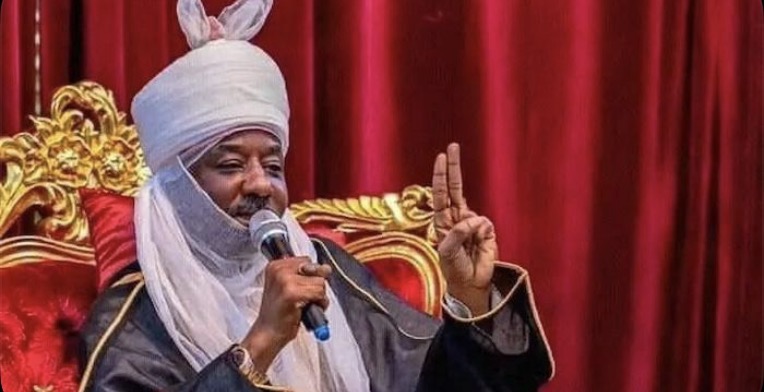
Nigeria’s debt burden is back in the spotlight after Emir of Kano Muhammadu Sanusi II warned that rising interest payments and government spending choices could threaten the country’s economic sustainability.
Speaking virtually at the Oxford Global Think Tank Leadership Conference in Abuja on Tuesday, November 3, Sanusi urged the Federal Government to exercise greater fiscal discipline and redirect spending towards sectors that can support long-term growth, including electricity, agriculture, roads and technology.
The former Central Bank of Nigeria governor cited World Bank figures showing that interest payments reached ₦7.7 trillion in the first half of 2026, compared with federal revenue of ₦6.2 trillion. Interest payments were therefore equivalent to about 124 per cent of the revenue figure for the period.
The ratio concerns interest payments against the particular federal revenue measure reported for the first half of the year; it is not a measure of every debt repayment against all government income.
The World Bank figures also show that interest payments rose from ₦5.6 trillion in the first half of 2025 to ₦7.7 trillion in the same period of 2026. Revenue increased over the period too, from ₦3.6 trillion to ₦6.2 trillion. However, the cost of interest remained higher than the revenue figure, while the bank reported that capital spending fell to ₦700 billion from one per cent of gross domestic product to 0.3 per cent.
That spending pattern is central to the concern. When a growing share of public resources is committed to interest costs, the government has less room to fund infrastructure, healthcare, education, power and other services without raising revenue or borrowing more.
Sanusi argued that economic reforms should not be judged only by changes in headline indicators. He acknowledged improvements in growth, inflation and foreign reserves, but said those gains had yet to translate sufficiently into better living conditions for ordinary Nigerians. He warned against treating criticism about poverty and hardship as an attack on government.
He called for stronger institutions, tighter control of public spending and greater private-sector investment. He also stressed that choices about infrastructure matter, arguing that large allocations to one area can mean fewer resources for another. His example was that every $10 billion spent on roads is $10 billion unavailable for electricity and agriculture.
The Federal Government, however, has disputed the way the 124 per cent figure is being interpreted. In an October 19 statement, the Ministry of Finance said the calculation compared interest obligations that included debts serviced on behalf of state governments with federal revenue alone. It argued that the revenue figure also excluded some income earned by government agencies and enterprises but not yet remitted to the Treasury.
The ministry said federal revenue rose by 72 per cent between the first halves of 2025 and 2026, while interest payments increased by 38 per cent. It also said revenue collection is usually higher in the second half of the year and argued that a six-month comparison should not be treated as a full assessment of debt sustainability. The ministry cited the World Bank’s projection that full-year 2026 debt service, including both interest and principal, would amount to 46 per cent of revenue.
The disagreement makes the issue more than a debate over one percentage. It raises questions about how public debt is measured, how much revenue government can reliably collect, and whether spending is producing visible improvements in people’s lives.
For Nigerians, the concern is not simply the size of the figures. It is what competing claims about debt and revenue mean for everyday services. Reliable electricity affects businesses and household costs. Roads influence the price of transporting food and goods. Investment in agriculture can shape food supply and prices, while healthcare and education determine whether economic growth improves people’s prospects.
Sanusi’s warning places those priorities at the centre of the fiscal debate. The government says its revenue position is improving and that the 124 per cent comparison needs context. The challenge now is to demonstrate that stronger revenue, borrowing and public spending can translate into better services, productive investment and a more sustainable economy.
Follow AfriView
Don’t Miss the Next Big Story
Enjoyed this story? Stay connected with AfriView for the latest breaking news, trending stories and important updates from Nigeria, Africa and around the world.