Nigeria Targets World Cup Qualification in Cricket
Nigeria’s YellowGreens make an impressive start to their T20 World Cup qualification campaign with a 160-run victory over The Gambia, raising hopes of advancing to the next stage and strengthening cricket’s growth in the country.
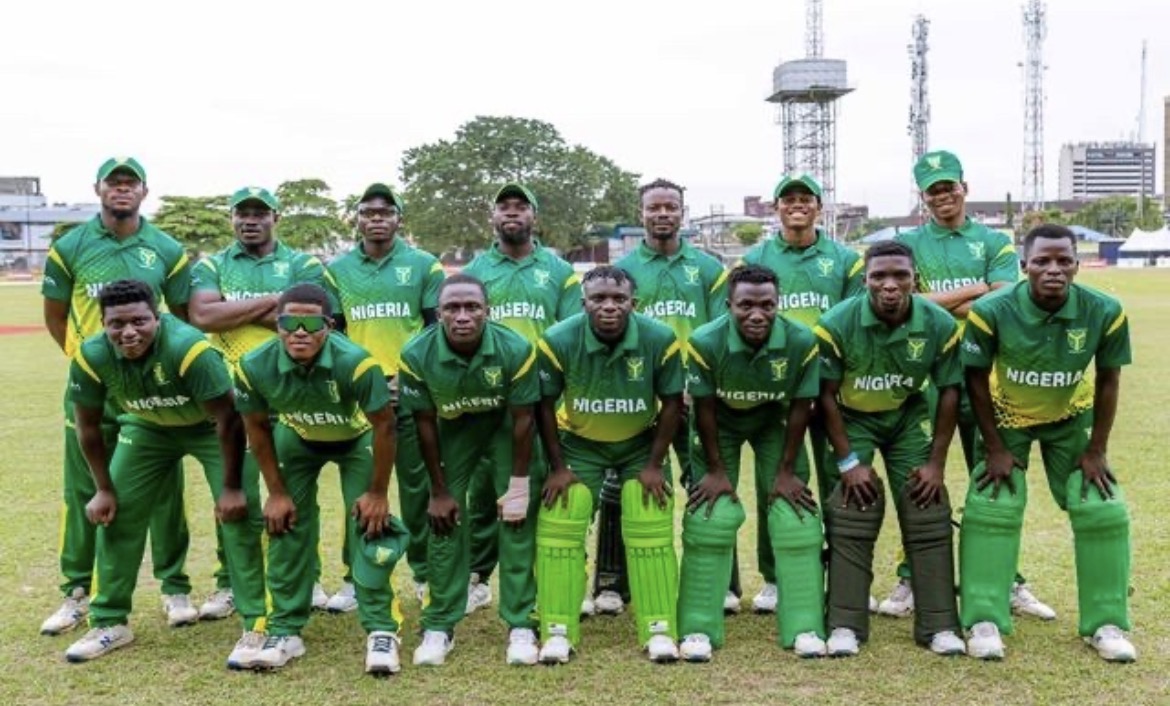
Nigeria’s senior men’s national cricket team, popularly known as the YellowGreens, is pursuing its dream of reaching the ICC Men’s T20 World Cup as the country hosts a crucial African qualification tournament in Abuja.
The Nigerian team began its campaign impressively, recording a commanding 160-run victory over The Gambia in the ICC Men’s T20 World Cup Africa Sub-Regional Qualifier C on October 20, 2026. The result gave the hosts an important early boost as they compete against five African countries for a place in the next qualification round.
Nigeria’s campaign represents an important opportunity for the country to strengthen its position in African cricket and bring greater attention to a sport that continues to develop across different parts of the country.
According to reports from the Nigeria Cricket Federation and Voice of Nigeria, the YellowGreens produced an outstanding batting performance before restricting The Gambia to 102 runs, securing one of the most convincing results of the opening round. (nigeriacricket.com.ng)
Nigeria Delivers an Impressive Opening Performance
Nigeria’s opening match demonstrated the team’s potential to compete strongly in the tournament.
After winning the toss and choosing to bat, the hosts scored an impressive 262 runs for the loss of one wicket in their allotted 20 overs. Their batting display placed considerable pressure on The Gambia, who needed an exceptional response to remain in contention.
Selim Salau was one of the leading performers, finishing unbeaten on 105 runs from 58 deliveries. His innings included 12 fours and three sixes, helping Nigeria establish a strong foundation.
Isaac Danladi also played a significant role, scoring 86 runs from 48 balls. His contribution complemented Salau’s performance and kept Nigeria’s scoring rate high throughout the innings.
Isaac Okpe then delivered a powerful finish, scoring an unbeaten 56 runs from only 16 deliveries. His late assault included six sixes and helped Nigeria reach a total of 262 runs.
The Gambia struggled during their reply and were eventually bowled out for 102 in 17.2 overs. Nigeria consequently secured a 160-run victory, providing a strong start to its qualification campaign. (nigeriacricket.com.ng)
The performance highlighted the importance of building substantial partnerships, accelerating the scoring rate at the right moment and maintaining pressure on opponents throughout a T20 match.
However, Nigeria will need to reproduce that level of performance against the remaining teams if it hopes to finish among the leading sides in the competition.
Six Countries Compete for Two Qualification Places
The Abuja tournament features Nigeria, Uganda, Zambia, Lesotho, Mozambique and The Gambia.
The six teams are competing in a round-robin format, with each country scheduled to play the other five. At the end of the competition, the two highest-ranked teams will advance to the ICC Men’s T20 World Cup Africa Regional Final in 2027.
Progression to the regional final would move Nigeria one step closer to its ultimate objective of qualifying for the 2028 ICC Men’s T20 World Cup, scheduled to be hosted by Australia and New Zealand.
The qualification process requires teams to perform consistently across several matches rather than rely on a single victory. A strong start can provide momentum, but dropped points in subsequent games could complicate a team’s chances of advancing.
Nigeria must therefore approach every remaining fixture with discipline, concentration and an understanding of the importance of its net run rate, which can become a decisive factor when teams finish level on points.
The competition also offers the YellowGreens an opportunity to test themselves against opponents with different playing styles and levels of international experience. (Punch Newspapers)
Uganda Presents a Major Challenge
Among Nigeria’s opponents, Uganda is expected to provide one of the toughest tests.
Uganda qualified for the 2024 ICC Men’s T20 World Cup and has gained valuable experience competing at a higher international level. That experience could become important in a tournament where pressure, tactical decisions and individual performances often determine the outcome of closely contested matches.
Nigeria’s coaching staff will need to prepare carefully for the challenge, particularly in the areas of bowling accuracy, fielding and the management of crucial moments.
The Nigerian team cannot afford to underestimate any opponent, but its meeting with Uganda is expected to be especially important in determining the final standings.
The YellowGreens will also need to take advantage of their familiarity with the playing conditions in Abuja. Playing at home can offer benefits, including reduced travel demands and support from local fans, although those advantages must be matched by strong performances on the pitch.
Coaching and Preparation Key to Nigeria’s Ambitions
Nigeria’s World Cup ambitions have been supported by preparations designed to improve the team’s readiness for the tournament.
Head coach Stephen Mangongo has emphasised the importance of preparation, specialist training and competitive matches in helping the squad perform at its best.
Reports from Cricket Africa indicate that the team underwent an extended preparation programme that included specialist camps, high-performance coaching and a quadrangular series.
The preparation was intended to give players opportunities to improve their technical skills, build team chemistry and develop the tactical awareness required for international competition.
Captain Chima Akachukwu is leading the side during the qualification campaign, with experienced players expected to contribute alongside younger members of the squad.
The captain’s leadership will be particularly important as Nigeria navigates the pressure of competing for one of the available qualification places.
The coaching staff must also make effective decisions regarding team selection, batting order and bowling combinations, adapting their approach to the conditions and the strengths of each opponent. (Cricket Africa)
Cricket Development in Nigeria Gains Attention
Beyond the immediate competition, Nigeria’s qualification campaign highlights the broader development of cricket in the country.
Cricket has a long history in Nigeria, but the sport competes for attention with football and other popular sporting activities. Continued investment in facilities, coaching, youth competitions and domestic leagues could help expand participation and create more opportunities for talented players.
The Nigeria Cricket Federation has a central role in developing the sport, organising competitions and supporting national teams as they pursue international opportunities.
Improved playing facilities are also important. Quality pitches and training grounds allow players to practise under conditions that better reflect international matches, helping them develop the skills required to compete at a higher level.
Domestic competitions can provide another important pathway by allowing emerging players to gain match experience before progressing to the national team.
A stronger domestic structure could also help coaches identify promising young cricketers, improve the depth of the national squad and create a more sustainable pipeline of talent.
Success at international tournaments can encourage further interest in the sport, particularly among young people who may be discovering cricket for the first time.
Young Players Could Shape the Future
Nigeria’s long-term progress will depend partly on its ability to identify and develop emerging talent.
Young players need consistent access to coaching, competitive matches and suitable equipment if they are to develop into international-level cricketers.
Schools, clubs and state cricket associations can contribute by introducing more people to the sport and creating opportunities for promising players to improve their abilities.
The recent progress of Nigeria’s age-grade teams also provides reasons for optimism. In September 2026, Nigeria’s under-19 women’s team defeated Zimbabwe by four runs to win the Africa qualifying final and secure a place at the 2027 ICC Under-19 Women’s T20 World Cup. That achievement demonstrates the potential for Nigerian cricket teams to make progress on the international stage. (icc)
Maintaining that progress will require sustained investment, effective administration and opportunities for young players to compete regularly.
 What Qualification Would Mean for Nigeria
Reaching the Africa Regional Final would be a significant achievement for the YellowGreens, keeping their ambition of qualifying for the 2028 T20 World Cup alive.
A successful campaign could also increase interest in Nigerian cricket, attract greater support for domestic competitions and strengthen the case for continued investment in facilities and player development.
Nevertheless, Nigeria must first navigate the remaining matches in Abuja. The victory over The Gambia provides an encouraging beginning, but the team will need consistency in batting, bowling and fielding to finish among the top two sides.
For supporters, the tournament represents an opportunity to follow the national team as it attempts to take another step towards the global stage.
Nigeria’s immediate objective is clear: win enough matches to advance to the next round. Its wider ambition is to establish itself as a stronger force in African cricket and eventually compete against the world’s leading teams.
The YellowGreens have made a convincing start. Their performances in the remaining fixtures will determine whether that opening victory becomes the foundation of a successful qualification campaign.