Nigeria’s $750 Million Cloud Investment Target Faces Growing Infrastructure Challenges
Unreliable electricity, rising diesel costs and limited data-centre capacity threaten the Federal Government’s ambition to position Nigeria as a regional hub for cloud computing and digital services.
Nigeria’s ambition to attract $750 million in private investment into its cloud and data infrastructure sector is facing growing challenges as unreliable electricity, rising operational costs and limited data-centre capacity threaten the country’s digital expansion plans.
The Federal Government, through its National Digital Cloud Policy, is targeting $250 million in private investment within the first 12 months and $750 million within 24 months. However, industry stakeholders have warned that the country’s existing infrastructure may struggle to support the scale of investment and technological development being proposed.
The concerns were highlighted in a report published by New Telegraph on Thursday, November 5, which examined the infrastructure constraints facing Nigeria’s growing data-centre and cloud computing industry.
Electricity costs threaten data-centre expansion
One of the biggest challenges confronting the sector is Nigeria’s unstable electricity supply.
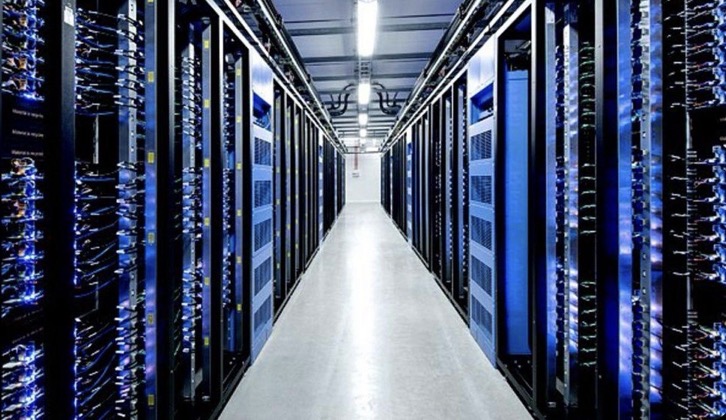
Data centres are specialised facilities that house computer servers, storage systems and networking equipment used to process, manage and store digital information. They require uninterrupted electricity not only to operate their servers but also to power cooling systems that prevent equipment from overheating.
In Nigeria, where electricity supply from the national grid remains unreliable, operators depend heavily on alternative power sources, including diesel and gas-powered generators.
According to the report, the average price of diesel has risen to approximately ₦1,900 per litre, while electricity tariffs for high-consumption Band A customers have increased by more than 300 per cent.
Innocent Itsukwi, General Manager of Data Centre Operations for West Africa at MainOne, an Equinix company, said the combined effects of electricity tariff increases, diesel prices, inflation and foreign exchange fluctuations had pushed data-centre operating costs up by approximately 300 per cent over the previous year.
The rising cost of maintaining uninterrupted power supply creates additional financial pressure for operators and could discourage investors considering large-scale infrastructure projects in the country.
Ayotunde Coker, Chief Executive Officer of Open Access Data Centres (OADC), also highlighted the limited number of operational data centres in Nigeria. He noted that the country currently has fewer than a dozen operational facilities and requires a tenfold increase in digital infrastructure to meet growing demand.
Government spending creates investment opportunities
Despite these challenges, Nigeria’s digital infrastructure market presents significant opportunities for private investors.
According to Kashifu Inuwa Abdullahi, Director-General of the National Information Technology Development Agency (NITDA), 326 federal ministries, departments and agencies spent approximately ₦3.89 trillion, equivalent to about $2.9 billion, on technology investments between 2023 and mid-2026.
Abdullahi explained that the government’s strategy involves consolidating public-sector technology demand and directing more of that spending towards domestic infrastructure.
The approach is intended to create a more predictable market for local cloud providers and encourage private companies to invest in facilities capable of supporting government operations.
Nigeria’s National Digital Cloud Policy also introduces a whole-of-government cloud procurement framework, under which government institutions will aggregate their demand for cloud services rather than independently purchasing separate solutions.
The government expects this approach to reduce duplicated expenditure, improve procurement efficiency and create stronger commercial incentives for infrastructure providers.
Nigeria risks losing ground to other African markets
Beyond electricity costs, industry stakeholders have raised concerns about Nigeria’s competitiveness in attracting major international cloud investments.
Ikechukwu Nnamani, Managing Director of Digital Realty Nigeria, said none of the world’s leading cloud providers currently operates a full cloud region in Nigeria.
He also observed that conversations around hyperscale cloud investments in Africa increasingly focus on countries such as Kenya, raising concerns about Nigeria’s ability to attract investments despite its large population and technology market.
Nnamani identified high import duties on information and communications technology equipment, multiple taxation and unreliable electricity as some of the factors discouraging investment.
He also recounted an instance in which a company considering Nigeria for a 20-megawatt Bitcoin mining project eventually selected Ethiopia because of its lower electricity costs.
These challenges could affect Nigeria’s ability to compete for investments in data centres, artificial intelligence computing and other emerging digital infrastructure markets.
New investments and policy reforms offer possible solutions
The Federal Government’s National Digital Cloud Policy is designed to address some of these challenges by improving the investment environment and expanding domestic infrastructure.
Unveiled in August 2026, the policy focuses on four major areas: investment and market development, regional digital service exports, government cloud transformation, and digital sovereignty and security.
It also provides for fiscal and regulatory incentives for qualifying infrastructure projects, measures to address energy constraints and technology-transfer requirements for investors benefiting from government incentives.
Some industry operators are already exploring alternative energy arrangements to reduce dependence on the national grid.
Coker disclosed that OADC is investing in direct utility connections in Lekki and plans to connect its facilities to gas pipelines, with on-site gas capacity of up to 50 megawatts envisaged.
Nigeria also possesses significant natural gas reserves, which could provide opportunities for more reliable power generation if the necessary infrastructure and investments are developed.
Nigeria’s cloud infrastructure ambitions extend beyond building more server facilities. The sector supports financial services, artificial intelligence, healthcare, education, e-commerce and government digital services.
A stronger domestic cloud ecosystem could also reduce dependence on foreign infrastructure, improve local data management and create opportunities for Nigerian technology companies to provide services across West Africa.
However, achieving the government’s $750 million investment target will require more than policy announcements. Reliable electricity, affordable infrastructure, predictable regulations and sustained investor confidence will be essential.
As Nigeria continues to position itself as a regional technology hub, the ability to resolve these underlying infrastructure challenges could determine whether its cloud investment ambition translates into tangible economic growth or remains an unrealised target.
Follow AfriView
Don’t Miss the Next Big Story
Enjoyed this story? Stay connected with AfriView for the latest breaking news, trending stories and important updates from Nigeria, Africa and around the world.