Nigerian-American Engineer Develops Automated Hair-Braiding Robot
Yinka Ogunbiyi and co-founder David Afolabi have developed HaloBraid, a machine designed to help hairstylists complete braiding faster while reducing repetitive hand movements.
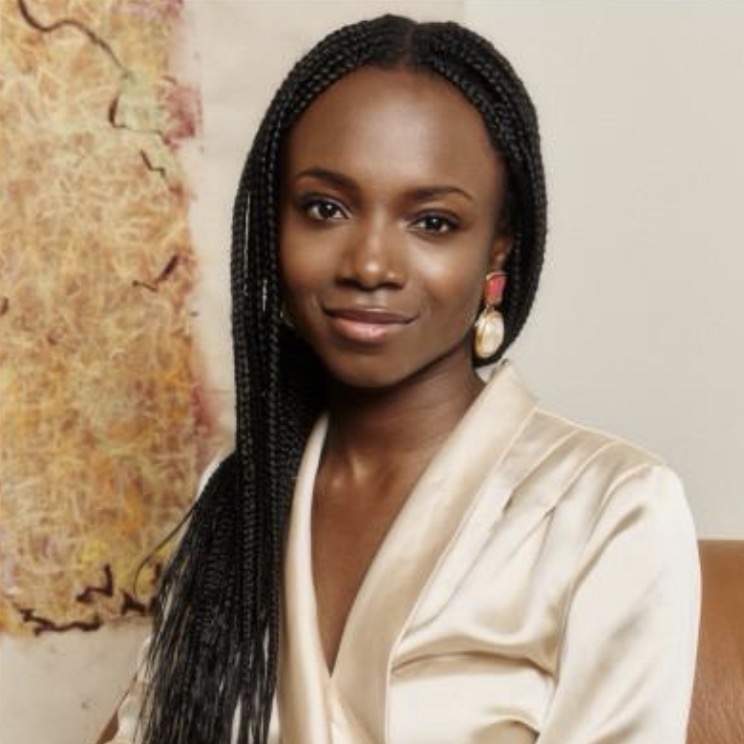
A Nigerian-American engineer, Yinka Ogunbiyi, and her co-founder, David Afolabi, have developed an automated hair-braiding machine designed to reduce the time and physical effort required for protective hairstyling.
The invention, known as HaloBraid, is designed to work alongside professional hairstylists by automating parts of the braiding process.
The technology has attracted attention because it applies engineering and robotics to an everyday activity that requires considerable time, precision and repetitive hand movements.
According to reports about the invention, the founders built more than 600 prototypes before developing the machine.
The device is designed to help stylists braid individual sections up to five times faster, while reducing some of the repetitive movements involved in the process.
Unlike a machine designed to replace an entire salon appointment, HaloBraid works as an assistant to the stylist.
The professional remains involved in preparing and sectioning the hair, beginning the braid and completing the final touches. The machine takes over parts of the repetitive weaving process.
This approach places the technology within the growing field of human-assisted automation, where machines are developed to support professionals rather than completely replace them. Ogunbiyi's idea reportedly began during the COVID-19 lockdown in 2020.
Unable to visit a salon, she attempted to make knotless braids herself. The process reportedly took four days, prompting her to consider whether technology could make the experience faster and easier.
Her background in biomechanical engineering provided a foundation for exploring the problem from a technical perspective.
She later partnered with Afolabi to develop the device and began working through the practical challenges involved in automating a process that requires careful coordination and precision.
The development process involved repeated experimentation and consultations with professional braiders to understand the requirements of the industry.
The founders eventually developed a prototype that could carry out parts of the braiding process while allowing stylists to maintain control over the overall hairstyle.
Their work received recognition through Harvard University's President's Innovation Challenge in 2025, where the team won a $75,000 grand prize.
The development of HaloBraid also raises an important question about how technology can be applied to industries that are not traditionally associated with robotics.
Discussions about automation often focus on manufacturing, transportation, medicine and software.
However, beauty and personal care services also involve repetitive tasks that can benefit from engineering solutions.
Professional hairstylists, particularly those who specialise in braiding, may spend several hours working with their hands and maintaining demanding physical positions.
The repetitive movements can contribute to discomfort and physical strain over time.
A machine that assists with parts of the process could potentially reduce some of this burden while allowing stylists to attend to more customers.
It could also improve the customer experience by reducing the time spent in the salon.
However, the technology will need to demonstrate that it can consistently produce quality results across different hair textures, braid styles and customer preferences.
Hair braiding is not simply a mechanical activity. It involves judgement, creativity, knowledge of hair care and the ability to adjust techniques to individual needs.
The challenge for the founders will be ensuring that automation complements those skills rather than compromising the quality and personalisation customers expect.
The company has reportedly secured $7 million in seed funding to support its commercial development.
That investment suggests confidence in the potential market for the technology, although its long-term success will depend on affordability, reliability, accessibility and adoption by professional stylists.
For African innovators, the development is also an example of how familiar cultural practices can inspire engineering ideas with wider commercial applications.
Braiding is an important part of personal care and cultural expression across many African communities and their diasporas.
The invention demonstrates that technology development does not always have to begin with an unfamiliar problem. Sometimes, it begins with an everyday frustration and the willingness to ask whether there is a better way to solve it.
Follow AfriView
Don’t Miss the Next Big Story
Enjoyed this story? Stay connected with AfriView for the latest breaking news, trending stories and important updates from Nigeria, Africa and around the world.