El-Rufai’s Wiretapping Trial: Court Sets November 25 for Defence as Legal Battle Continues
The former Kaduna governor must respond to the prosecution’s case after a Federal High Court rejected his no-case submission, moving the high-profile trial into its next stage without determining his guilt.
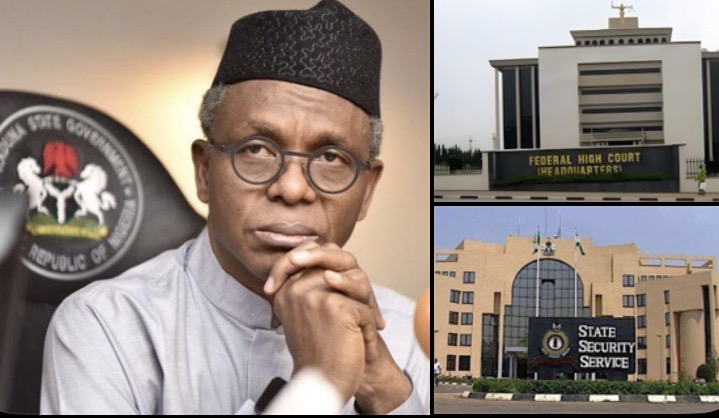
The wiretapping trial involving former Kaduna State Governor Nasir El-Rufai has moved to another stage after a Federal High Court in Abuja rejected his application seeking discharge and acquittal without presenting a defence.
The court’s decision, delivered by Justice Joyce Abdulmalik on Monday, October 26, 2026, means El-Rufai is expected to respond to the prosecution’s case when the proceedings resume on November 25.
The case concerns allegations of unlawful interception of telephone conversations involving National Security Adviser Nuhu Ribadu.
According to reports published on October 27, the court ruled that the prosecution had presented sufficient evidence for the defendant to be required to enter his defence in the five-count amended charge filed by the Department of State Services (DSS).
The decision does not amount to a conviction. It means the court has rejected the argument that the prosecution’s evidence was insufficient to require a response from the defendant at this stage.
Why El-Rufai asked the court to dismiss the case
El-Rufai’s legal team filed a no-case submission after the prosecution concluded its presentation of evidence.
A no-case submission is an application asking a court to discharge a defendant without requiring the defendant to present a defence. Such an application generally argues that the prosecution has not presented sufficient evidence to justify calling for a response.
In this case, El-Rufai’s counsel, Paul Erokoro, argued that the evidence presented by the prosecution did not establish a sufficient basis for requiring his client to defend himself against the charges.
The prosecution, represented by Oluwole Aladedoye, opposed the application and urged the court to allow the case to proceed.
The prosecution maintained that the oral and documentary evidence presented during the trial was sufficient to require a response from the defendant.
After considering the arguments, Justice Abdulmalik dismissed the no-case submission and directed El-Rufai to enter his defence.
The case has now been adjourned until November 25, when the next stage is expected to begin.
How the case began
The allegations arose following comments El-Rufai made during an interview on Arise Television’s Prime Time programme in February 2026.
During the interview, the former governor alleged that someone had intercepted Ribadu’s telephone conversations and that he had heard a conversation in which the national security adviser allegedly instructed security operatives to arrest him.
The comments subsequently became the subject of the prosecution.
The DSS brought the case against El-Rufai in connection with allegations concerning unlawful interception of telephone communications.
It is important to distinguish between the statements that triggered the controversy, the charges brought by the prosecution and any findings the court has made during the proceedings.
The allegations remain matters for the judicial process to determine. The court’s latest ruling addressed whether the prosecution’s case could proceed to the defence stage; it did not establish the defendant’s guilt.
What the ruling means for the trial
The dismissal of the no-case submission means the court considers that the case should proceed rather than end at the close of the prosecution’s evidence.
El-Rufai will now have an opportunity to present his defence, subject to the applicable court procedures.
The defence stage may involve testimony, documentary evidence and other material the defendant’s legal team considers relevant and admissible.
The prosecution may also have opportunities to respond in accordance with the rules governing the proceedings.
The eventual outcome will depend on the evidence and legal arguments considered by the court, not simply on the fact that the no-case submission was dismissed.
For that reason, the November 25 date is significant as the next scheduled step in the proceedings, rather than a date on which a final judgment should be assumed.
Why the case is attracting public attention
The proceedings have drawn attention because El-Rufai is a prominent political figure and the allegations involve communications linked to Nigeria’s national security adviser.
The case also raises broader questions about telephone interception, privacy, the lawful powers of security agencies and the legal limits governing access to private communications.
Telephone interception is a sensitive subject because communications data can involve personal information, political activity and matters of national security.
However, the legal questions in an individual case must be determined by the evidence and the relevant law. Public debate about privacy and surveillance should not be treated as proof that any particular allegation has been established.
The proceedings will therefore be watched by people interested in both the political implications of the case and the legal issues surrounding the alleged interception.
The next scheduled date is November 25, 2026, when El-Rufai is expected to open his defence.
Further proceedings may clarify how the defence responds to the prosecution’s evidence and which issues remain contested between the parties.
Until the court reaches a final determination, the allegations should be reported as allegations, and El-Rufai should not be described as having been convicted of the offences charged.
The distinction matters in responsible reporting, especially in high-profile political cases where public commentary can move faster than the judicial process.
For now, the latest ruling represents a procedural development: the court has declined to terminate the case at the no-case stage and has directed it to proceed to the defence stage.
The next hearing is expected to provide a clearer picture of how the defence intends to respond to the allegations.
Follow AfriView
Don’t Miss the Next Big Story
Enjoyed this story? Stay connected with AfriView for the latest breaking news, trending stories and important updates from Nigeria, Africa and around the world.