Peter Obi Gets Key Role as NDC Unveils 2027 Campaign Council
The former Anambra governor will serve alongside party leader Seriake Dickson as the Nigeria Democratic Congress begins organising its campaign for the 2027 general election.
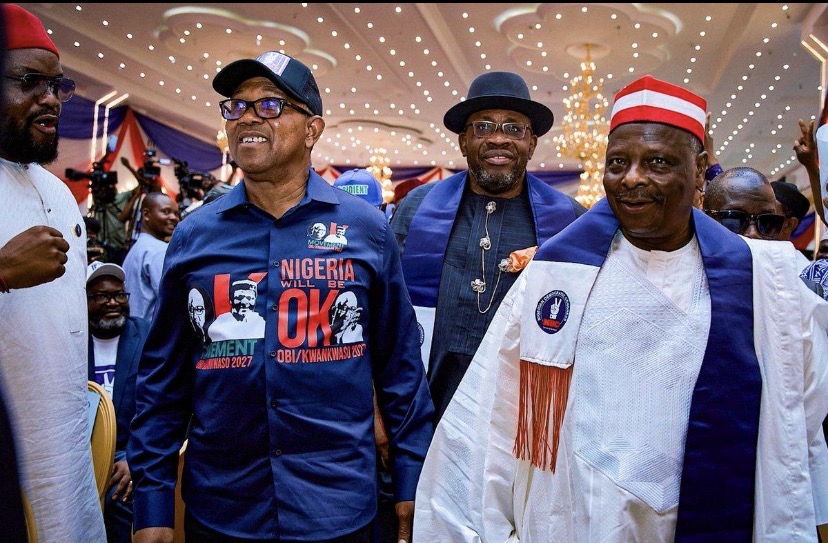
The Nigeria Democratic Congress (NDC) has constituted its National Campaign Council for the 2027 general elections, naming its presidential candidate, Peter Obi, as co-chairman of the campaign structure.
The announcement, made by the party on Sunday, October 25, places Obi alongside the NDC’s National Leader, Senator Henry Seriake Dickson, who will serve as chairman of the council. Rabiu Musa Kwankwaso, the party’s vice-presidential candidate, has been named co-vice-chairman.
The appointments bring the party’s leading political figures into a central structure responsible for coordinating its campaign activities and mobilising support ahead of the next general election.
According to the party, the council will provide strategic leadership, coordinate campaign activities nationwide and mobilise Nigerians behind its vision of a “new, just, and prosperous Nigeria.”
The party also said it intends to pursue a people centred and issue based campaign as it prepares to present its candidates and political agenda to voters.
Key appointments in the campaign council
Beyond the appointments of Obi, Dickson and Kwankwaso, the NDC announced other positions within its campaign leadership.
The party’s National Chairman, Senator Cleopas Moses Zuwoghe, will serve as vice-chairman, while National Secretary Ikenna Morgan Enekweizu has been appointed council secretary.
Ibrahim Hussain Abdulkarim was named Director-General of the presidential campaign. Other figures listed in the campaign structure include former Secretary to the Government of the Federation, Babachir Lawal, who was named in the National Campaign Advisory Council, alongside several political figures and party officials.
The party has also announced a 40-member National Campaign Advisory Council and appointed 37 state campaign coordinators.
The wider structure is intended to support the national leadership with campaign planning, communication, mobilisation and coordination across the country. The effectiveness of these appointments, however, will depend on how the party translates the announced structure into operational activities at state and grassroots levels.
What the appointments mean for the NDC
The formation of a national campaign council is an important organisational step for a political party preparing for a general election. It provides a framework for assigning responsibilities, coordinating messages and organising activities across different parts of the country.
For the NDC, placing its presidential and vice-presidential candidates within the council’s leadership structure gives them direct roles in the campaign organisation.
Obi’s position as co-chairman places him alongside Dickson in the council’s leadership, while Kwankwaso’s role as co-vice-chairman brings the party’s vice-presidential candidate into the same coordinating structure.
The party will need to ensure that its national campaign priorities are communicated consistently across its state structures and that local campaign teams have clear responsibilities.
It will also need to communicate its policy proposals and explain how its plans would address the concerns of Nigerians. Issues such as the cost of living, unemployment, insecurity, infrastructure and access to public services are likely to remain important considerations for voters as the election approaches.
Although the council’s formation establishes the party’s campaign leadership, the announcement alone does not indicate the level of public support it will receive or how effectively its campaign will operate.
Party calls for unity ahead of the elections
In its announcement, the NDC called on party members, supporters and Nigerians to remain united and focused as it pursues its political objectives.
The party described the council as a mechanism for providing strategic leadership and driving a coordinated, issue-based campaign. It also expressed its intention to mobilise support around its proposed vision for the country.
The next stage will involve turning the appointments into a working campaign operation, including coordination between national leaders, state coordinators and other campaign officials.
A nationwide campaign requires more than a list of appointments. It depends on organisation, sustained communication, engagement with voters and the ability to present a clear political message across different communities.
The NDC’s announcement of 37 state campaign coordinators suggests that its campaign structure is intended to extend beyond its national leadership. How those coordinators work with local party organisations will be an important part of the party’s preparations.
Attention turns to the 2027 campaign
The unveiling of the council comes as political parties organise their leadership and campaign structures ahead of the 2027 general elections.
For the NDC, the immediate challenge is to coordinate its campaign team, communicate its policy priorities and build a structure capable of reaching voters nationwide.
Obi’s appointment as co-chairman, alongside Dickson as chairman and Kwankwaso as co-vice-chairman, places the party’s principal figures at the centre of that effort.
The party has said it wants its campaign to be people-centred and issue-based. Its ability to demonstrate what that means through specific proposals, public engagement and campaign activities will become clearer as the election approaches.
The announcement marks a new organisational stage in the NDC’s preparations, with attention now turning to the council’s activities and the party’s plans for the months ahead.
Follow AfriView
Don’t Miss the Next Big Story
Enjoyed this story? Stay connected with AfriView for the latest breaking news, trending stories and important updates from Nigeria, Africa and around the world.