This Tiny AI Duck Robot Has 20,000 Pre-Orders and It Can Learn New Tricks
Hugging Face’s programmable Microduck has attracted thousands of buyers after a demonstration featuring Nvidia CEO Jensen Huang captured attention online.
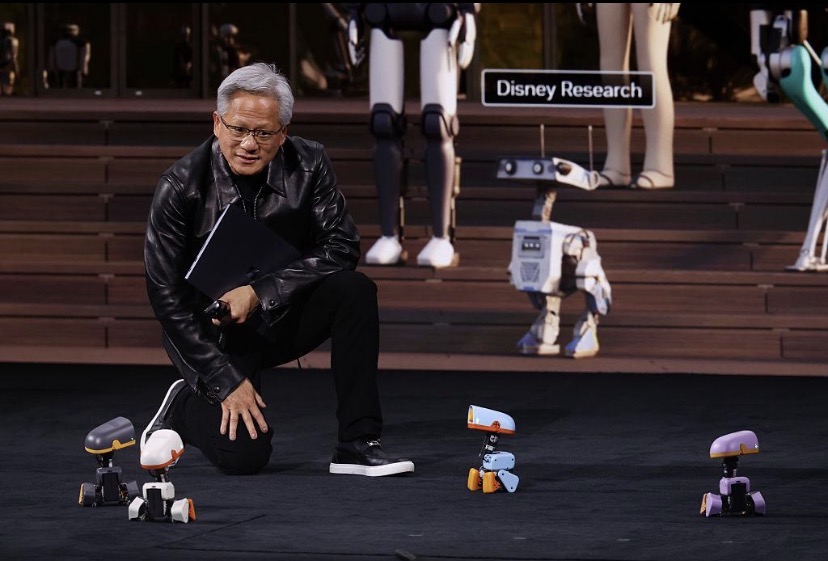
A tiny robot that waddles like a duck, makes unusual electronic noises and performs tricks on command is attracting major attention online, with more than 20,000 pre-orders reported after a demonstration featuring Nvidia chief executive Jensen Huang went viral.
The robot, called Microduck, was developed by Pollen Robotics, the robotics company behind the Hugging Face AI community. It became a talking point after Huang interacted with several of the small machines during Nvidia’s GTC Berlin conference.
In footage shared online, the robots move around, sit down, get back up and perform movements that resemble a tiny robot dance. Their duck-like appearance and playful behaviour have helped make the demonstration appealing beyond the usual audience for robotics and artificial intelligence.
According to a report by TechCrunch published on October 23, Hugging Face co-founder Clément Delangue said pre-orders had exceeded 20,000 units following the viral demonstration.
The response suggests that people are interested not only in AI chatbots but also in machines that can interact with the physical world.
What can the tiny robot actually do?
Microduck stands approximately 25 centimetres tall and weighs less than 800 grams. Despite its small size, it contains 15 motors and several sensors that help it move and respond to its surroundings.
According to Pollen Robotics, the robot can walk, sit, stand up, crouch, recover from many common falls and pick up small objects using its articulated beak.
It can also be equipped with roller attachments for skating-style movements. Demonstrations have shown users training additional movements, including more complex tricks.
However, Microduck is not a fully autonomous household assistant. Its capabilities are focused on movement, experimentation and robotics development rather than performing everyday chores such as cooking, cleaning or managing a home.
The robot is designed to be entertaining straight out of the box while also giving developers and robotics enthusiasts a platform to explore how artificial intelligence can control physical machines.
It can be taught new tricks
One of Microduck’s most interesting features is its open-source software, which allows users to experiment with its behaviour and train new movements.
The robot’s developers use reinforcement learning, a machine-learning approach in which a system improves its behaviour through repeated attempts and feedback.
Users can train behaviours in a physics simulator before transferring the resulting instructions to the physical robot. This approach helps developers experiment with movements without repeatedly testing every unsuccessful attempt on the actual machine.
Pollen Robotics has published software tools that allow developers to inspect, modify and share robot behaviours.
The company says the platform is intended to make experimentation with physical AI more accessible to people who might not have access to expensive robotics laboratories.
That does not mean the robot can independently learn absolutely anything a user asks it to do. Its abilities depend on its hardware, software, training process and the specific behaviour being developed.
How much does it cost?
Microduck was launched with an introductory pre-order price of $399 before taxes and shipping, according to the manufacturer’s website.
It is available in four colour options: cream, graphite, lavender and sky blue.
The price is substantially lower than that of many research-grade humanoid robots, although Microduck is also much smaller and designed for a different range of tasks.
Its target audience includes developers, researchers, educators and people interested in experimenting with robotics.
Pre-orders indicate customer interest, but they are not the same as completed deliveries or proof that the robot has become a mass-market consumer product.
Why a tiny robot in the AI race
Much of the public conversation about artificial intelligence focuses on systems that generate text, images, music and computer code. Microduck represents another part of the industry’s development: AI that controls movement in the real world.
Teaching a robot to walk, recover from a fall or pick up an object involves challenges that a chatbot does not face. The machine must respond to physical forces, interpret sensor information and coordinate its motors to carry out a task.
Smaller robots can provide a more accessible environment for testing these ideas. Their size and cost can make experimentation easier for students, independent developers and researchers.
The viral attention surrounding Microduck also demonstrates how product design can shape public interest in emerging technology. A small robot with a recognisable character may attract people who would not ordinarily follow developments in machine learning or robotics.
For now, the robot’s popularity is being measured primarily through reported pre-orders and online attention. Its longer-term success will depend on whether it delivers a useful development experience and whether buyers continue using it after receiving their machines.
Microduck may look like a toy, but underneath its playful appearance is a platform designed to help people experiment with how artificial intelligence moves from computer simulations into the physical world.
Follow AfriView
Don’t Miss the Next Big Story
Enjoyed this story? Stay connected with AfriView for the latest breaking news, trending stories and important updates from Nigeria, Africa and around the world.