Lula Wins Brazil’s Presidential Election
Brazil’s President Luiz Inácio Lula da Silva defeats right-wing challenger Flávio Bolsonaro to secure an unprecedented fourth non-consecutive term, following a closely contested election that exposed deep political divisions across the country.
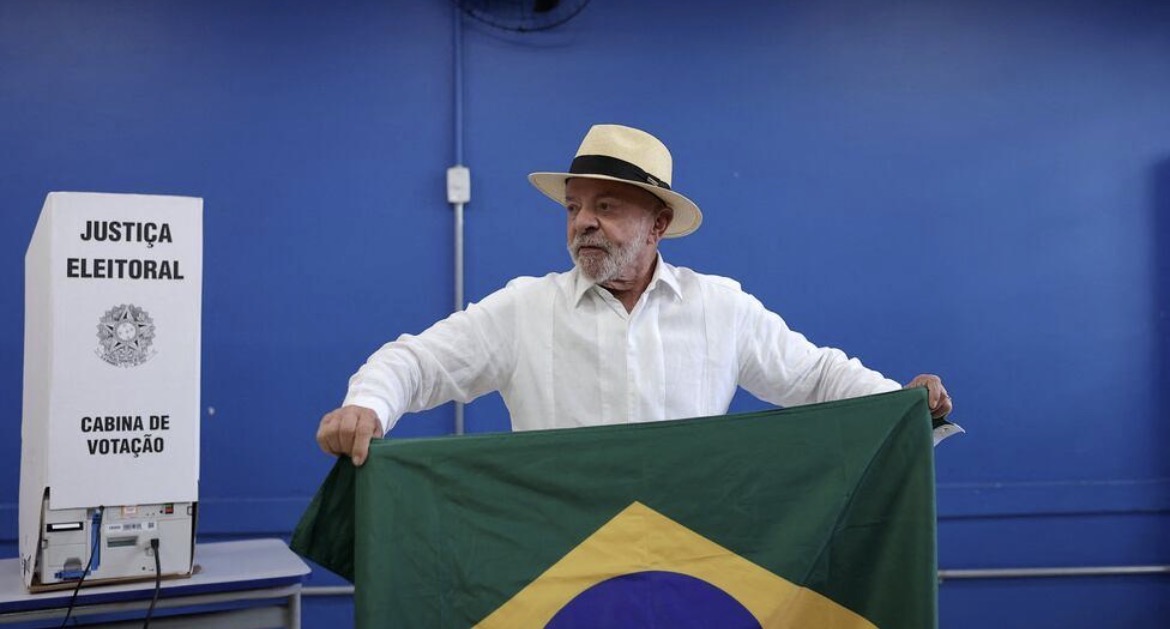
Brazilian President Luiz Inácio Lula da Silva has won the country’s presidential election, defeating right-wing challenger Flávio Bolsonaro in a closely contested runoff vote. The victory secures Lula another term in office and strengthens his position as one of the most influential political figures in modern Brazilian history.
The country’s electoral authority confirmed Lula’s victory following Sunday’s election on October 25, 2026. The result marks a significant moment for Brazil, Latin America’s largest country, where political divisions over the economy, public security, social welfare and national leadership have shaped recent elections.
Lula’s victory also represents a remarkable political comeback. After trailing Flávio Bolsonaro in the first round of voting, the incumbent president rallied supporters and secured enough votes to win the decisive second round.
According to reported results, Lula received approximately 51.75 per cent of the valid votes, compared with 48.25 per cent for Bolsonaro, with more than 98 per cent of polling sections counted during the initial announcement of the result.
The outcome means Lula will continue leading Brazil after his current term, extending a political career that has spanned several decades.
A Historic Victory for Lula
Lula, whose full name is Luiz Inácio Lula da Silva, first became president in 2003 and served two consecutive terms until 2010. He returned to the presidency in January 2023 after defeating former president Jair Bolsonaro in the 2022 election.
His latest victory gives him a fourth non-consecutive presidential term, an unprecedented achievement in Brazil’s modern democratic history.
The election was particularly significant because Lula entered the runoff facing a determined challenge from Flávio Bolsonaro, a senator seeking to continue the political movement associated with his father, former president Jair Bolsonaro.
Flávio Bolsonaro emerged as a strong contender during the first round, securing approximately 47 per cent of the valid votes, while Lula received about 45 per cent. Neither candidate obtained the majority required to win outright, forcing the election into a second round.
The initial result suggested that Lula faced a difficult path to re-election. However, his campaign worked to attract undecided voters and strengthen support among working-class Brazilians, low-income households and people who favoured the continuation of his social programmes.
The president ultimately reversed the first-round result, delivering a victory that demonstrated the continued strength of his political support.
Political Divisions Shape the Election
Brazil’s presidential election highlighted the deep ideological divisions that have shaped the country’s politics in recent years.
Lula represents the left-wing Workers’ Party, commonly known as the PT, which promotes social welfare programmes, workers’ rights and government action to address poverty and inequality.
Flávio Bolsonaro, on the other hand, campaigned on a conservative platform that emphasised public security, economic reforms and a political agenda associated with his father.
The two candidates offered different approaches to addressing the country’s challenges, including rising living costs, crime, economic growth and the role of government in supporting vulnerable communities.
For Lula’s supporters, the election represented an opportunity to preserve social programmes and protect policies aimed at reducing poverty.
His opponents argued that Brazil needed stronger action on public security, greater economic efficiency and a change in political leadership.
These competing priorities made the election one of the country’s most closely watched political contests.
The result indicates that, despite significant opposition, Lula retained enough support to secure another term. However, the narrow margin also demonstrates that a substantial portion of the electorate favoured an alternative direction for the country.
Cost of Living Remains a Major Concern
Economic concerns played an important role throughout the campaign.
Although Brazil recorded positive developments in employment and several social indicators during Lula’s current administration, many households continued to face pressure from living costs and personal debt.
For ordinary Brazilians, the cost of food, housing, transportation and other essential goods remained important considerations when deciding which candidate to support.
Lula’s campaign emphasised his record on social assistance and his commitment to policies designed to support lower-income households.
He presented poverty reduction, improved access to essential services and assistance for working families as central priorities for his next administration.
The president also promoted proposals aimed at easing household financial pressure, including measures involving social benefits and debt relief.
His supporters argued that continuing these programmes would help protect vulnerable families and maintain progress in reducing inequality.
However, critics questioned the government’s spending priorities and raised concerns about public debt, fiscal discipline and the long-term sustainability of some social programmes.
These economic challenges are expected to remain central to Lula’s next term.
His administration will need to balance demands for greater social spending with pressure to maintain financial stability, encourage investment and support sustainable economic growth.
Flávio Bolsonaro’s Defeat and the Future of Brazil’s Right
Flávio Bolsonaro’s defeat represents a setback for Brazil’s right-wing political movement, although his strong performance demonstrates that conservative politics remains influential.
The senator campaigned as the political heir to his father, Jair Bolsonaro, whose presidency from 2019 to 2022 reshaped Brazil’s political landscape.
During the campaign, Flávio sought to attract voters concerned about crime, government spending and the direction of the country’s economy.
His message appealed to many Brazilians who wanted a change in leadership and supported more conservative policies.
Despite finishing behind Lula in the runoff, his performance showed that the opposition retains a substantial electoral base.
The result also raises questions about the future leadership of the Brazilian right and the direction its political parties will take before the next presidential election.
Flávio Bolsonaro and his allies are likely to remain important figures in national politics, particularly as debates continue over economic policy, public security and the government’s performance.
The opposition’s ability to organise, maintain voter support and negotiate with other political groups will influence how effectively it challenges Lula’s administration.
Challenges Await Lula’s Next Administration
Although Lula has secured another term, his victory does not guarantee that he will find governing Brazil easy.
One of the most significant challenges will be working with a Congress in which conservative parties and political allies of the right retain considerable influence.
Brazil’s political system requires cooperation between the president, lawmakers and other institutions to advance many major policy proposals.
Consequently, Lula will need to negotiate with legislators who may oppose some of his economic and social priorities.
This could complicate efforts to introduce reforms, approve budgets and implement campaign promises.
His administration will also face pressure to demonstrate measurable improvements in people’s daily lives.
Voters will expect the government to address economic hardship, improve public services, tackle crime and create opportunities for workers and businesses.
Failure to deliver visible progress could weaken public confidence, particularly among voters who supported Lula because of his promises to improve living conditions.
The president will therefore need to maintain political support while managing disagreements with the opposition and other groups within Brazil’s political system.
Climate Change and the Amazon Rainforest
Environmental protection is another important issue facing Lula’s government.
Brazil is home to a significant portion of the Amazon rainforest, one of the world’s most important ecosystems because of its role in biodiversity, carbon storage and global climate regulation.
The management of the Amazon has become an international concern, with governments, environmental organisations and businesses closely monitoring Brazil’s environmental policies.
Lula has presented environmental protection as an important part of his administration’s agenda and has supported efforts to strengthen measures against illegal deforestation.
His government must nevertheless balance environmental objectives with economic development, agriculture, energy production and demands for new infrastructure.
Debates over oil exploration and other economic activities have also complicated his environmental record.
During the next term, the administration will face pressure to demonstrate that Brazil can support economic growth while protecting its forests and meeting environmental commitments.
The decisions made by Lula’s government could influence Brazil’s international reputation and its relationships with countries seeking stronger cooperation on climate change.
Brazil’s International Relations
Lula’s re-election is also expected to influence Brazil’s foreign policy and its relationships with major international powers.
As one of the largest economies in Latin America, Brazil plays an important role in regional diplomacy, international trade and discussions about climate change.
Lula has traditionally supported diplomatic engagement, stronger cooperation among developing countries and an active role for Brazil in international organisations.
His administration is likely to continue pursuing trade and investment opportunities while maintaining relationships with a wide range of countries.
However, disagreements over tariffs, trade restrictions and political influence could complicate relations with the United States and other major economic partners.
Brazil will need to protect its economic interests while seeking opportunities to expand exports, attract foreign investment and strengthen regional cooperation.
The country’s position on international conflicts, environmental agreements and global economic issues will also remain important during Lula’s next term.
His victory ensures continuity in Brazil’s leadership for now, but the government’s ability to translate its diplomatic ambitions into economic benefits will be closely watched.
What Lula’s Victory Means for Brazil
Lula’s election victory represents both a political achievement and a major responsibility.
His supporters will expect him to protect social welfare programmes, address inequality and improve economic opportunities.
At the same time, voters who supported Flávio Bolsonaro will continue demanding stronger public security, effective economic management and greater accountability from political leaders.
The close result demonstrates that Brazil remains divided over the country’s future direction.
For Lula, the immediate priority will be bringing together a country whose electorate remains sharply split between competing political visions.
His government must also demonstrate that it can respond to the concerns of voters who remain dissatisfied with economic conditions and public services.
The president’s next term will therefore be judged not only by his political experience but also by his administration’s ability to deliver practical results.
Conclusion
Lula’s victory over Flávio Bolsonaro marks a historic moment in Brazilian politics, giving the incumbent president an unprecedented fourth non-consecutive term.
The result follows a closely fought campaign dominated by debates over the cost of living, public security, social welfare, environmental protection and the country’s economic future.
Although Lula has secured another mandate, significant challenges remain, including political opposition in Congress, pressure to improve household finances and the need to maintain economic stability.
His government will also face expectations to protect the Amazon rainforest, strengthen international partnerships and deliver on its campaign promises.
For Brazil, the election represents both continuity and uncertainty. Lula has won another opportunity to shape the country’s future, but the success of his next administration will ultimately depend on whether he can turn his electoral victory into meaningful improvements in the lives of Brazilian citizens.
Follow AfriView
Don’t Miss the Next Big Story
Enjoyed this story? Stay connected with AfriView for the latest breaking news, trending stories and important updates from Nigeria, Africa and around the world.