Opinion & AnalysisNigeria· Opinion
Surviving Is Becoming a Full-Time Job for Young Nigerians
When food, transport, housing and other basic expenses consume so much of an income, planning for a better future becomes increasingly difficult.
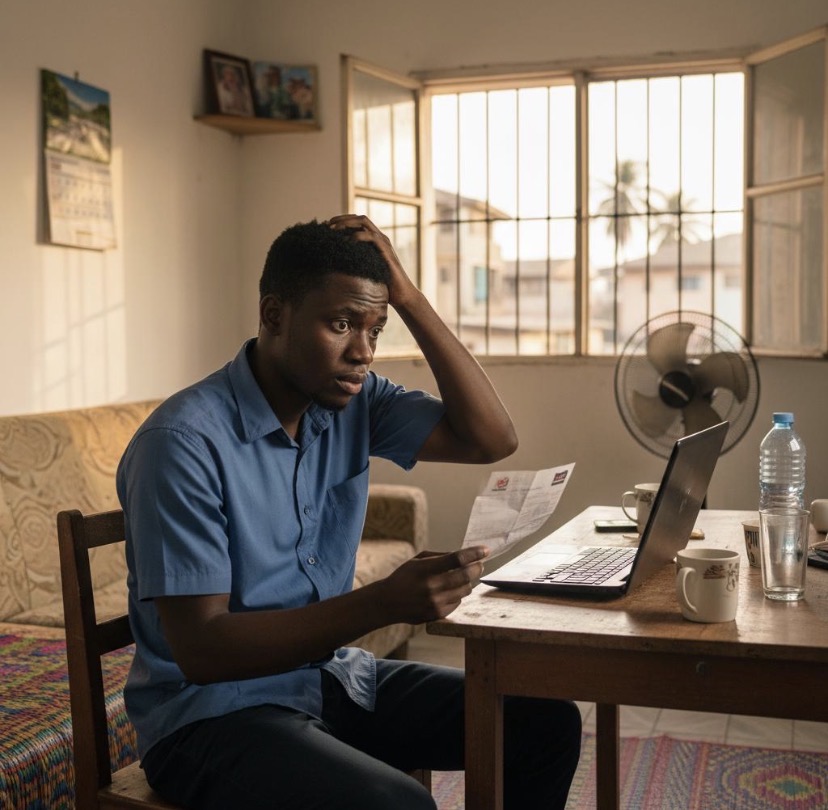
There is a particular kind of exhaustion that comes from constantly calculating whether your money will be enough.
You receive money and immediately begin dividing it in your head. The share for food. The share for transport. Something for data, electricity or other necessities. Perhaps a little for savings, if anything remains.
Then an unexpected expense appears, and the calculation starts all over again.
For many young Nigerians, managing money has become more than a useful life skill. It is a daily exercise in deciding what can wait, what must be paid for immediately and what may have to be sacrificed.
And somewhere in the middle of all this, they are still expected to build careers, develop themselves, save for the future and pursue their ambitions.
That is a lot to ask of people who are already spending so much energy trying to meet their basic needs.
When basic needs take over the budget
Food, transportation, housing and utilities are not luxuries. They are necessities that people need to live, study and work.
Yet when the cost of these essentials rises, the effects go beyond the amount spent at the market or the money deducted from a monthly salary. Higher expenses can leave people with less room to save, learn new skills, handle emergencies or invest in opportunities that could improve their circumstances.
Nigeria’s National Bureau of Statistics tracks changes in consumer prices through its Consumer Price Index reports. These figures provide an important picture of price movements, including changes in the cost of food and other goods and services.
But behind every percentage is a household trying to adjust.
It may be a student deciding whether to spend more on transport or reduce other expenses. It may be a recent graduate whose first salary does not stretch far enough to cover rent, food and commuting.
Their circumstances differ, but the challenge can be similar: when necessities consume most of what comes in, there is little room left for anything else.
Working hard is not always enough
Young Nigerians are frequently encouraged to work harder, become more disciplined and find additional sources of income.
There is value in these suggestions. Financial discipline, professional development and entrepreneurship can help people improve their circumstances.
But hard work does not automatically guarantee financial stability.
Someone can be committed to their job and still struggle if their income is insufficient for their expenses. A student can be serious about their education and still find it difficult to afford the resources needed to learn. A young person can be ambitious and responsible while facing economic conditions beyond their immediate control.
This is why conversations about financial hardship should not always begin with personal discipline.
Sometimes, the issue is not that people do not know how to manage money. It is that there is too little money to manage in the first place.
Telling people to budget carefully is useful, but budgeting cannot solve every problem created by low income and high living costs.
The cost of survival
One consequence of financial pressure is that long-term plans can become harder to maintain.
A young person may want to take a professional course, start a business, purchase work equipment or save towards further education. But if most available income goes towards immediate needs, these plans can be postponed repeatedly.
Over time, the focus shifts from building a future to getting through the present.
This can also affect people’s emotional well-being. Constant financial worry can make it harder to concentrate, rest properly or feel secure about what comes next. The pressure is not identical for everyone, and financial difficulty does not define a person’s entire life. Still, it is worth recognising that economic hardship affects more than bank balances.
There is also a wider cost. When young people cannot afford the tools, training or opportunities that could help them become more productive, their individual struggles can become a broader challenge for families, businesses and society.
A country cannot fully benefit from the energy and ideas of its young population if too many people are constantly occupied with meeting basic needs.
What needs to change?
The answer cannot be to tell young Nigerians to stop having ambitions or to become comfortable with hardship.
Personal financial planning remains important, but broader solutions are necessary too. These include better employment opportunities, wages that reflect economic realities, reliable public services and policies that reduce the pressure of essential expenses.
Nigeria’s National Minimum Wage Act, amended in 2024, established a national minimum wage of ₦70,000 per month for covered workers, subject to the law’s provisions. But a stated minimum wage and a person’s actual ability to afford necessities are two different questions. The cost of living varies by location, household size and individual circumstances.
It is therefore important to assess not only what workers earn, but what their earnings can realistically provide.
Employers, policymakers and institutions all have roles to play in making work more capable of supporting a decent standard of living. At the same time, initiatives that improve access to education, career development and entrepreneurship can help young people pursue opportunities beyond immediate survival.
These changes will not happen overnight. But the conversation must acknowledge that resilience alone cannot replace economic security.
Young people deserve room to live, not just survive
There is nothing wrong with learning to manage money carefully or becoming resourceful during difficult times. These are valuable abilities.
The problem begins when constant struggle is treated as a normal condition that young people should simply learn to endure.
Young Nigerians should be able to work towards meaningful goals without every ambition becoming another financial burden they cannot afford. They should have room to learn, save, rest, make mistakes and plan beyond the next urgent expense.
Survival is necessary, but it should not consume so much of a person’s life that there is barely any energy left to build one.
Follow AfriView
Don’t Miss the Next Big Story
Enjoyed this story? Stay connected with AfriView for the latest breaking news, trending stories and important updates from Nigeria, Africa and around the world.