State Police Bill Moves Closer to Tinubu's Desk as 28 Nigerian States Approve Constitutional Amendment
The National Assembly says 28 State Houses of Assembly have approved the proposed constitutional amendment, exceeding the required 24-state threshold and paving the way for the bill to be transmitted to President Bola Tinubu for assent.
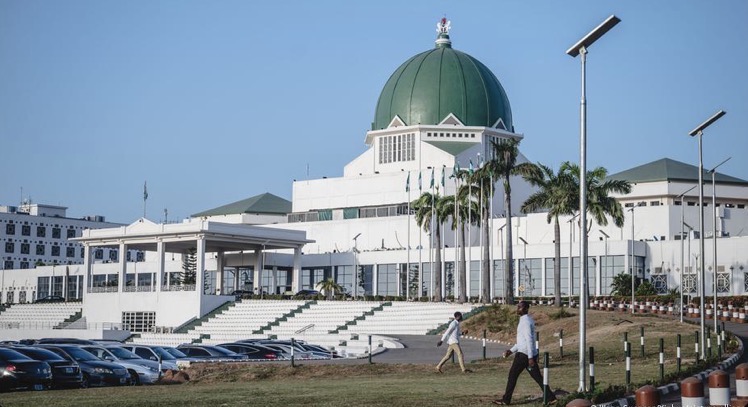
Nigeria's long-running debate over the establishment of state police has reached a significant milestone after 28 State Houses of Assembly approved a proposed constitutional amendment seeking to decentralise the country's policing system.
The National Assembly confirmed the development on November 3, 2026, announcing that the number of approving state legislatures had exceeded the constitutional requirement for an amendment to the 1999 Constitution.
The Clerk to the National Assembly, Kamoru Ogunlana, disclosed this in a statement, explaining that his office had received and verified reports from the 28 assemblies, including their accompanying votes and proceedings.
Under Section 9 of the 1999 Constitution, a constitutional alteration must receive approval from at least two-thirds of Nigeria's 36 State Houses of Assembly. This means that a minimum of 24 states must endorse the proposal before the amendment can proceed.
With 28 states now approving the bill, the required threshold has been surpassed by four states.
Ogunlana said the National Assembly had commenced the administrative processes required to transmit the bill to President Bola Tinubu for assent.
The proposed legislation, known as the Constitution of the Federal Republic of Nigeria, 1999 (Sixth Alteration) Bill, 2026, seeks to provide a constitutional framework for establishing State Police Services and related matters.
The bill was transmitted to the 36 State Houses of Assembly on September 16, 2026, for consideration and approval. The legislatures were initially given 30 days, with October 15 set as the deadline for communicating their decisions.
However, the Clerk explained that his office would continue receiving reports from state assemblies until the bill was transmitted for presidential assent.
He also clarified that Section 9 of the Constitution does not expressly require a third reading for a Constitution Alteration Bill, unlike the procedure applicable to ordinary legislation.
The 28 states that approved the proposal
According to the National Assembly's confirmation, the 28 states that endorsed the proposed amendment are Adamawa, Delta, Edo, Kwara, Nasarawa, Ogun, Osun, Oyo, Plateau, Rivers, Taraba, Zamfara, Enugu, Anambra, Imo, Ekiti, Kebbi, Akwa Ibom, Bayelsa, Benue, Cross River, Abia, Yobe, Kaduna, Lagos, Kano, Sokoto and Ebonyi.
The approval represents an important development in the country's efforts to reconsider its centralised security structure.
Why Nigeria is considering state police
Nigeria currently operates a centrally controlled policing system through the Nigeria Police Force, with authority largely concentrated at the federal level.
Although state governors are regarded as chief security officers of their respective states, they do not exercise direct operational control over independent state police commands.
Supporters of state police argue that the current arrangement places considerable pressure on a single national force responsible for responding to security threats across a country with 36 states and the Federal Capital Territory.
They believe decentralising policing could improve intelligence gathering, strengthen community relationships and allow security agencies to respond more quickly to local threats.
The proposal has gained renewed attention amid persistent insecurity involving kidnapping, banditry, terrorism, communal violence and other criminal activities across different parts of the country.
For instance, security challenges in the North-West, North-East and parts of the North-Central region differ significantly from those confronting communities in the South-East and South-South.
Proponents argue that locally established police services could develop a better understanding of these differences and deploy resources according to the specific security needs of their communities.
However, the proposal has not been without opposition and concerns.
Critics have warned that state governors could potentially use local police formations to intimidate political opponents, suppress protests or target individuals who challenge their administrations.
There are also questions about funding, recruitment standards, training, operational independence and the protection of citizens' fundamental rights.
Another concern is the possibility of unequal policing capacity between states. Wealthier states may have greater resources to establish and maintain effective police services, while states with weaker revenue bases could struggle to finance their operations.
These concerns make accountability mechanisms and clear constitutional boundaries particularly important.
What happens next?
Although the approval by 28 state assemblies satisfies the constitutional requirement for state-level endorsement, it does not mean that state police services will begin operating immediately.
The National Assembly must complete the necessary administrative and constitutional processes before the bill is formally transmitted to President Tinubu for assent.
Further institutional arrangements will also be required to establish the structure, responsibilities and oversight mechanisms governing the proposed police services.
The development nevertheless represents a major step in Nigeria's security reform debate.
Whether state police will improve security across the country will ultimately depend on how the system is implemented, funded and supervised.
For millions of Nigerians affected by insecurity, the expectation is that any change to the country's policing structure will translate into safer communities, faster responses to emergencies and greater accountability from security institutions.
Follow AfriView
Don’t Miss the Next Big Story
Enjoyed this story? Stay connected with AfriView for the latest breaking news, trending stories and important updates from Nigeria, Africa and around the world.