Ikot Abasi Free Zone emerges as a major industrial investment hub
Proposed investments in aluminium production, gas processing, power generation and maritime infrastructure could transform Akwa Ibom's industrial landscape, but several projects still face implementation challenges.
The Federal Government is renewing efforts to position the Liberty Oil and Gas Free Zone, centred around Ikot Abasi in Akwa Ibom State, as a major destination for industrial and energy investments.
The industrial corridor is attracting attention amid plans to revive the Aluminium Smelter Company of Nigeria (ALSCON), expand gas commercialisation, improve electricity infrastructure and develop maritime facilities.
The free zone was established through a presidential declaration in July 2020 under former President Muhammadu Buhari. It brings together public institutions and private-sector investors, including the Akwa Ibom State Government, the Nigerian National Petroleum Company Limited and companies operating within the oil and gas investment ecosystem.
According to the Oil and Gas Free Zones Authority (OGFZA), the zone covers approximately 50,215 hectares across six local government areas. Its scale and access to energy resources have made it a significant part of Nigeria's ambitions to strengthen domestic manufacturing and attract foreign investment.
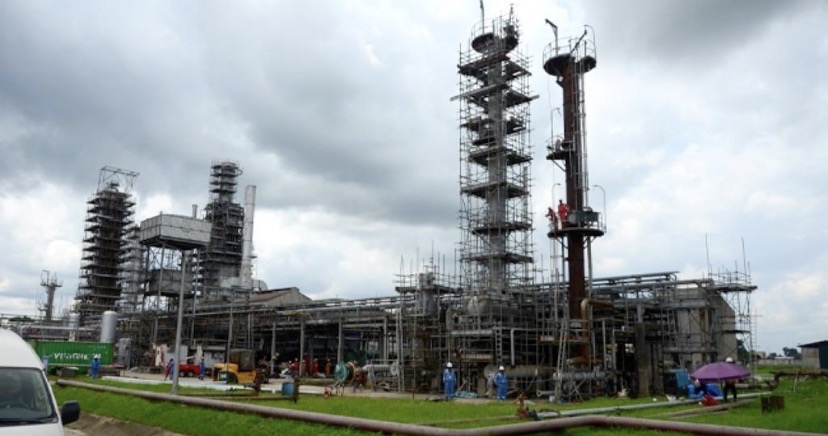
One of the most prominent proposals associated with the industrial corridor is the planned revival of ALSCON, an aluminium production facility located in Ikot Abasi.
In August 2025, President Bola Tinubu announced that the company's management had submitted a $465 million investment proposal for a six-year rehabilitation programme aimed at restoring the facility to full production capacity.
The proposed investment follows years of operational and legal challenges that have prevented ALSCON from functioning at its intended capacity.
If implemented, the rehabilitation could reduce Nigeria's dependence on imported aluminium and support industries that rely on the metal, including construction, automotive manufacturing and packaging.
However, the investment proposal should not be mistaken for a completed rehabilitation or a return to full-scale production.
Another major component of the industrial development plan is gas commercialisation.
A proposed $120 million gas-flare elimination project linked to Qua Iboe Export Hub Limited is expected to capture approximately 15 million standard cubic feet of gas and convert it into commercially useful energy resources.
The project forms part of broader efforts to reduce gas flaring while making more of Nigeria's natural resources available for industrial use.
Gas availability is particularly important for energy-intensive industries such as aluminium production, petrochemicals and manufacturing. Reliable electricity and gas supply could therefore determine whether the proposed industrial investments become commercially viable.
The corridor also has maritime ambitions. The development of port infrastructure could improve cargo movement, support exports and strengthen connections between manufacturers and international markets.
However, the geographical details of the proposed maritime development require careful distinction.
Community leaders in Eastern Obolo have disputed the location attributed to the proposed seaport, arguing that it falls within their local government area rather than Ikot Abasi.
Electricity transmission is another important requirement. A proposed 58-kilometre, 330-kilovolt transmission line linking Qua Iboe Terminal to Ikot Abasi is expected to improve power delivery to industrial facilities. Reports have identified right-of-way and compensation issues as challenges to its progress.
Beyond large companies, the development of the corridor could create opportunities for smaller businesses. Industrial operations typically generate demand for transportation, accommodation, catering, equipment supplies, construction services and technical support.
The potential employment benefits could extend to engineers, technicians, logistics workers and other professionals. However, projected job figures should be treated cautiously until projects become operational and actual employment numbers are published.
The renewed attention on Ikot Abasi reflects Nigeria's wider effort to diversify its economy beyond crude oil exports by strengthening manufacturing, energy processing and non-oil trade.
Follow AfriView
Don’t Miss the Next Big Story
Enjoyed this story? Stay connected with AfriView for the latest breaking news, trending stories and important updates from Nigeria, Africa and around the world.