Nigeria Targets European Investors With One-Million-Hectare Cocoa Expansion Plan
The Federal Government is seeking international investment to expand tree crop production, improve cocoa traceability and strengthen Nigeria’s position in the global agricultural export market.
The Federal Government has unveiled plans to attract European investors into Nigeria’s agricultural sector through a one-million-hectare tree crops expansion programme, with cocoa expected to play a major role in the initiative.
The programme was presented to European cocoa industry leaders and investors in Brussels on Thursday, October 29, during the Nigeria/West Africa Cocoa Origins–EU Industry Match-Making Forum.
The event, organised on the sidelines of the Nigeria-Belgium-Luxembourg Business Forum, was designed to introduce international investors to opportunities within Nigeria’s agricultural value chains and encourage long-term commercial partnerships.
According to the government, the initiative aims to expand tree crop cultivation while establishing a production system that meets international standards for environmental sustainability and product traceability.
The Senior Special Assistant to the President on Agribusiness, Dr Kingsley Uzoma, said the programme would provide a structured approach to agricultural expansion, ensuring that new plantations are properly mapped and monitored from the beginning.
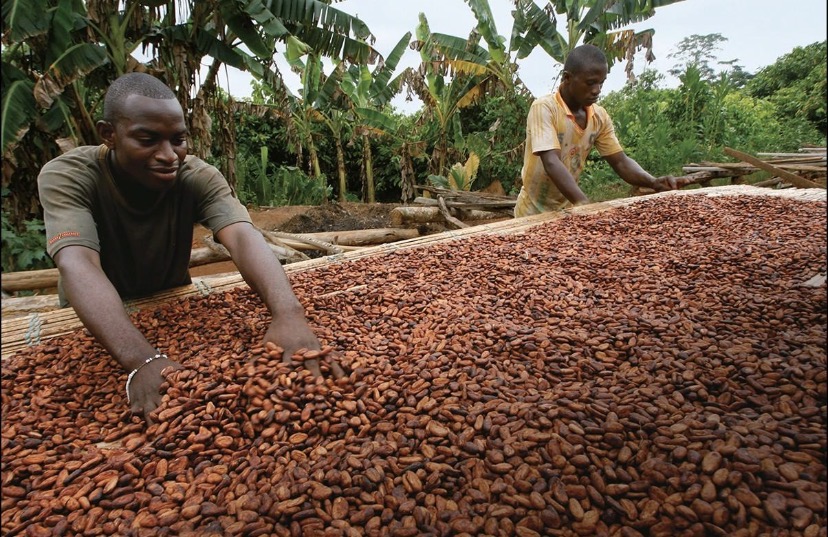
Nigeria currently has more than 350,000 cocoa-farming families cultivating over 1.4 million hectares of land. The proposed expansion programme is expected to build on this existing production base while improving the country’s ability to supply international markets.
The government is particularly interested in attracting European participation through long-term cocoa purchasing agreements, investment in processing facilities and partnerships involving agricultural production regions.
The focus on European investors comes at a time when the global cocoa industry is paying greater attention to the origin and environmental impact of agricultural products entering international markets.
One major factor influencing the development is the European Union Deforestation Regulation (EUDR), which introduces stricter requirements for products associated with deforestation, including cocoa.
Under the regulation, businesses placing covered products on the European market must demonstrate that their commodities are not linked to deforestation or forest degradation after December 31, 2020. They must also provide information that allows products to be traced back to the land where they were produced.
The regulation is scheduled to apply to large and medium-sized operators from December 30, 2026, with a later implementation date for micro and small operators.
For Nigerian cocoa farmers and exporters, meeting these requirements will be important for maintaining access to the European market.
The challenge is particularly significant because cocoa production in Nigeria involves hundreds of thousands of smallholder farmers operating across different communities, with supply chains that can involve several intermediaries before the beans reach international buyers.
Without reliable farm records, geographical information and effective monitoring systems, exporters may struggle to provide the documentation required by international buyers.
The Lagos Chamber of Commerce and Industry has previously warned that more than half of Nigeria’s cocoa could face difficulties meeting the European Union’s traceability requirements.
This raises concerns about the possibility of Nigerian cocoa losing access to valuable export markets if the necessary systems are not established quickly.
Beyond expanding production, the Federal Government’s proposed programme therefore places considerable emphasis on traceability and deforestation-free cultivation.
The government also hopes to attract investment into processing, an area that could help Nigeria move beyond exporting primarily raw agricultural commodities.
Increasing local processing capacity could create opportunities for businesses involved in chocolate production, cocoa butter manufacturing, packaging, transportation and other related activities.
It could also strengthen employment opportunities across cocoa-producing communities while allowing more value to remain within the domestic economy.
The Brussels forum brought together European cocoa grinders, chocolate manufacturers and traders alongside Nigerian, Ghanaian and Ivorian exporters, processors and agricultural cooperatives.
Participants were expected to engage in business-to-business meetings, investment discussions and regional partnership sessions.
However, attracting investment will require more than presenting opportunities to international businesses. Investors will also need confidence in Nigeria’s agricultural infrastructure, regulatory environment, supply consistency and ability to meet international standards.
For farmers, the success of the initiative will depend on whether the proposed expansion translates into better access to finance, improved farming support, reliable markets and stronger earning opportunities.
Nigeria’s cocoa industry has considerable potential, but improving its position in the international market will require sustained investment and effective implementation of the government’s plans.
The one-million-hectare programme could provide an opportunity to strengthen the sector, provided its environmental commitments, production targets and investment promises are translated into measurable results.
Follow AfriView
Don’t Miss the Next Big Story
Enjoyed this story? Stay connected with AfriView for the latest breaking news, trending stories and important updates from Nigeria, Africa and around the world.