
Nigeria Needs More Deep Seaports as Lekki Port Reaches Capacity, NPA Boss Says
Nigeria's growing cargo volumes are putting pressure on existing maritime infrastructure, prompting the Nigerian Ports Authority to call for increased private investment in deep seaport development.
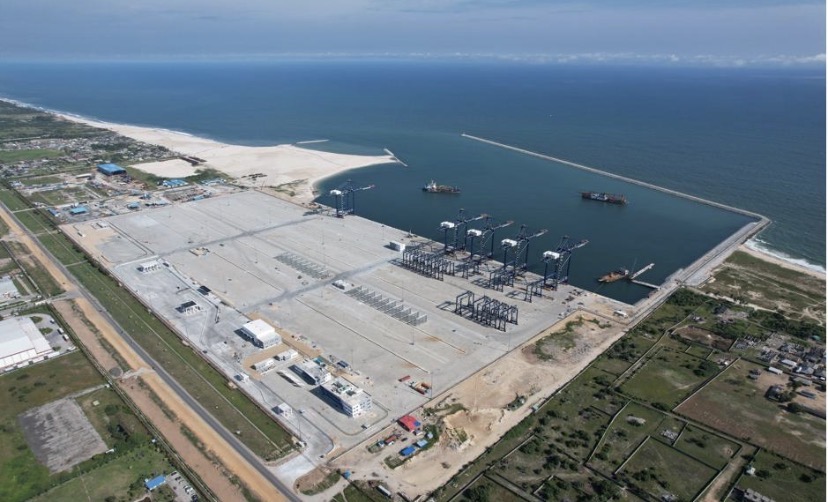
Nigeria’s growing demand for maritime transportation has renewed calls for increased investment in deep seaport infrastructure, following claims by the Nigerian Ports Authority (NPA) that the Lekki Deep Sea Port has already exhausted its capacity barely three years after commissioning.
The Managing Director of the NPA, Dr Abubakar Dantsoho, made the disclosure while addressing international maritime investors at the World Ports Conference in London.
He said Nigeria urgently needed additional port infrastructure to accommodate increasing import and export volumes driven by population growth, urbanisation and expanding economic activities.
According to him, the country’s existing maritime infrastructure must expand to accommodate larger vessels and higher cargo volumes if Nigeria intends to strengthen its position as a major trade destination in West Africa.
Lekki Deep Sea Port highlights Nigeria’s growing demand
The Lekki Deep Sea Port, located in Lagos, was commissioned in January 2023 as one of Nigeria’s major investments in modern maritime infrastructure.
The $1.6 billion facility was developed through a partnership involving China Harbour Engineering Company, Tolaram Group and other investors.
Designed to accommodate large container vessels and improve cargo-handling capacity, the port was expected to reduce pressure on existing facilities and strengthen Nigeria’s maritime competitiveness.
However, Dantsoho said the facility had already exhausted its capacity within approximately three years of operation.
He described this development as evidence of the increasing demand for port services and the need to expand the country’s maritime infrastructure.
The NPA chief maintained that additional investments would enable Nigeria to handle larger volumes of imports while improving its capacity to move locally produced goods into international markets.
Why Nigeria needs more deep seaports
Nigeria’s position as Africa’s most populous country makes its maritime infrastructure particularly important to international trade.
A significant proportion of imported goods entering the country arrives through seaports, including machinery, industrial materials, vehicles, food products and consumer goods.
As the population grows and economic activities expand, the demand for efficient cargo transportation is also expected to increase.
However, limited port capacity can create operational difficulties, including vessel delays, cargo congestion, higher logistics expenses and increased costs for businesses.
These challenges can eventually affect consumers through higher prices of imported goods and increased production costs for businesses that depend on imported raw materials.
Dantsoho also noted that Nigeria receives a substantial share of cargo destined for the West African sub-region, making additional maritime investment important beyond the country’s domestic economic needs.
Government turns to private investors
The NPA managing director acknowledged that developing deep seaports requires significant financial resources that governments across West Africa cannot provide independently.
He therefore called on international investors to take advantage of investment opportunities in Nigeria’s maritime industry.
According to him, private-sector participation will be necessary to accelerate infrastructure development, expand cargo-handling capacity and support the region’s growing trade activities.
His comments also highlight the importance of public-private partnerships in financing large infrastructure projects.
Nigeria has already approved several proposed deep seaport projects as part of its broader maritime expansion strategy.
In September 2026, the Federal Government announced approval for six deep seaports: Ibom, Bakassi, Agge, Gateway, Ondo and Bonny.
The government also approved the modernisation of Onne, Rivers, Delta and Calabar ports to improve cargo handling and reduce pressure on existing facilities.
These projects are expected to complement existing infrastructure and distribute maritime activities across different coastal regions.
What does this mean for Nigeria’s economy?
Expanding port infrastructure could create opportunities beyond the maritime industry.
New seaports and upgraded facilities could support employment in shipping, logistics, construction, warehousing, transportation and manufacturing.
They could also improve access to international markets for Nigerian exporters, particularly businesses dealing in agricultural products, manufactured goods and other commodities.
However, building additional ports alone may not resolve Nigeria’s maritime challenges.
Efficient road and rail connections, reliable electricity, modern cargo-handling equipment, transparent customs procedures and effective port management will also be necessary to ensure that goods move efficiently from seaports to their final destinations.
Without these supporting systems, additional port capacity could create new infrastructure without adequately addressing existing logistics problems.
As Nigeria seeks to strengthen its position in regional trade, the growing demand for maritime services presents both an economic opportunity and an infrastructure challenge.
The question is whether the country can translate its investment ambitions into efficient port facilities capable of supporting its expanding economy.
Follow AfriView
Don’t Miss the Next Big Story
Enjoyed this story? Stay connected with AfriView for the latest breaking news, trending stories and important updates from Nigeria, Africa and around the world.