NCDC Clarifies ₦10 Billion Emergency Health Fund, Says Allocation Covers Multiple Disease Threats
Nigeria’s disease control agency says the intervention is not exclusively for Ebola preparedness, while warning that the amount remains far below the country’s estimated annual health security requirements.
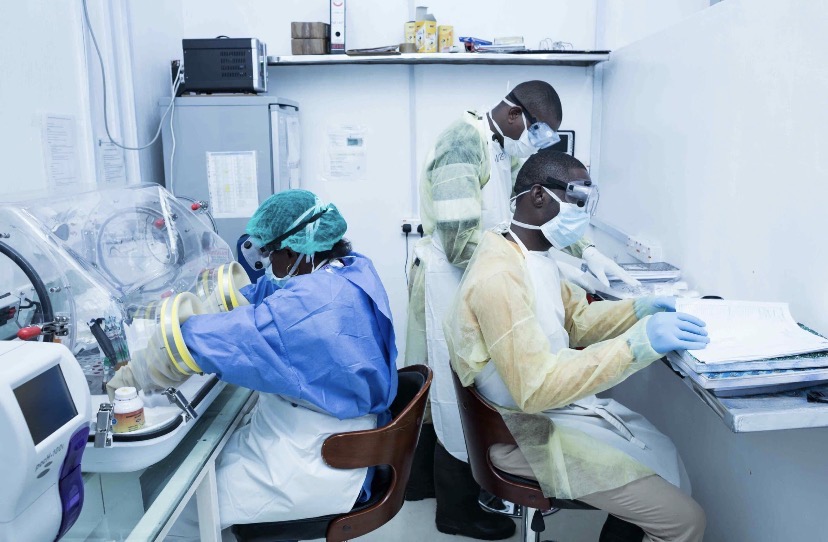
Nigeria’s efforts to strengthen its preparedness against infectious disease outbreaks have come under renewed scrutiny following clarification by the Nigeria Centre for Disease Control and Prevention (NCDC) that the Federal Government’s ₦10 billion emergency health intervention is not intended solely for Ebola response.
The agency’s Director-General, Jide Idris, explained that the funding was requested to support preparedness and response activities involving several epidemic-prone diseases, including Lassa fever and other public health threats.
The clarification follows public discussions about the purpose and adequacy of the emergency allocation approved by President Bola Tinubu.
Speaking during an interview on Channels Television’s Politics Today, Idris explained that several disease-control activities require similar interventions, making it possible to strengthen preparedness across multiple diseases through shared systems.
These activities include surveillance, laboratory diagnosis, screening, monitoring at points of entry and other emergency response measures.
The clarification is important because Nigeria’s public health security depends on its ability to identify and respond to several disease threats rather than concentrating resources on one outbreak.
Why the funding covers more than Ebola
Ebola remains one of the most closely monitored infectious disease threats because of its potential to cause severe illness and death.
However, Nigeria also faces recurring public health challenges involving diseases such as Lassa fever, cholera, meningitis, diphtheria, measles and mpox.
Lassa fever is particularly significant because Nigeria experiences seasonal outbreaks, with cases often increasing during periods associated with greater transmission risks.
The disease is caused by the Lassa virus and is primarily transmitted to humans through contact with food or household items contaminated by infected rodents.
Human-to-human transmission can also occur through direct contact with infected bodily fluids, particularly in healthcare settings where infection prevention measures are inadequate.
Cholera, meanwhile, remains a serious concern where access to safe drinking water and sanitation is limited.
These different diseases require specialised medical interventions, but several elements of outbreak preparedness are shared.
For example, an effective surveillance system can help health authorities identify unusual disease patterns and detect outbreaks before they spread widely.
Laboratory capacity is equally important because suspected cases must be tested and confirmed quickly to guide treatment and public health decisions.
Healthcare workers also require adequate protective equipment, training and established reporting procedures.
This is why the NCDC says the emergency intervention is intended to strengthen broader health security systems.
Is ₦10 billion enough?
Beyond explaining the purpose of the funding, Idris has raised concerns about whether the allocation is sufficient to meet Nigeria’s public health needs.
According to him, implementing the country’s National Action Plan for Health Security, covering 2025 to 2029, is estimated to cost approximately ₦522 billion over five years.
This translates to an average annual requirement of approximately ₦104.4 billion.
Against that estimate, the ₦10 billion emergency intervention represents roughly two per cent of the average yearly funding requirement.
The comparison highlights the difference between providing emergency financial support and maintaining a sustainable public health security system.
Emergency funding can help address immediate requirements, but disease preparedness involves continuous investment in infrastructure, personnel, laboratory services, surveillance networks and response coordination.
The NCDC’s concerns therefore extend beyond the immediate allocation.
They point to the need for consistent funding from federal and state governments, alongside support from development partners.
Nigeria’s public health preparedness challenge
Nigeria’s population, geographic size and movement of people across different states create additional challenges for disease surveillance.
An outbreak that begins in one community can spread to other locations through travel, trade and social interactions.
This makes early detection and rapid communication between health authorities particularly important.
The country also needs functional laboratories capable of testing suspected cases, trained healthcare workers who can identify symptoms and adequate facilities for isolating and treating patients when necessary.
Without these systems, even a relatively small outbreak can place significant pressure on healthcare facilities.
Another important concern is public awareness.
People must understand how infectious diseases spread, when to seek medical attention and how to reduce their exposure to preventable risks.
For diseases such as cholera, access to clean water, sanitation and hygiene education remains essential.
For Lassa fever, environmental sanitation and appropriate food storage can help reduce exposure to rodents.
Funding must translate into measurable outcomes
While the clarification provides a better understanding of the intervention’s intended purpose, questions about implementation and accountability remain important.
The public needs to understand how emergency funding is allocated, which institutions receive support and what improvements are expected from the expenditure.
In addition, the NCDC had previously indicated that the intervention had not yet been released to the agency as of its October 25 briefing. Its latest explanation of the fund’s purpose does not, by itself, establish that the money has subsequently been disbursed.
This distinction matters because an approved allocation does not automatically translate into resources available for immediate use.
Nigeria’s ability to respond effectively to future outbreaks will depend not only on announcements of emergency funding but also on timely disbursement, effective coordination and transparent reporting.
The ₦10 billion intervention may strengthen specific preparedness activities, but the wider funding gap identified by the NCDC demonstrates that disease prevention cannot depend on emergency allocations alone.
For a country facing multiple infectious disease threats, sustained investment in public health infrastructure remains essential to protecting lives and preventing manageable outbreaks from becoming national emergencies.
Follow AfriView
Don’t Miss the Next Big Story
Enjoyed this story? Stay connected with AfriView for the latest breaking news, trending stories and important updates from Nigeria, Africa and around the world.