National Assembly Proposes 74 Additional Seats for Women in Nigeria
National Assembly Considers 74 Additional Seats for Women
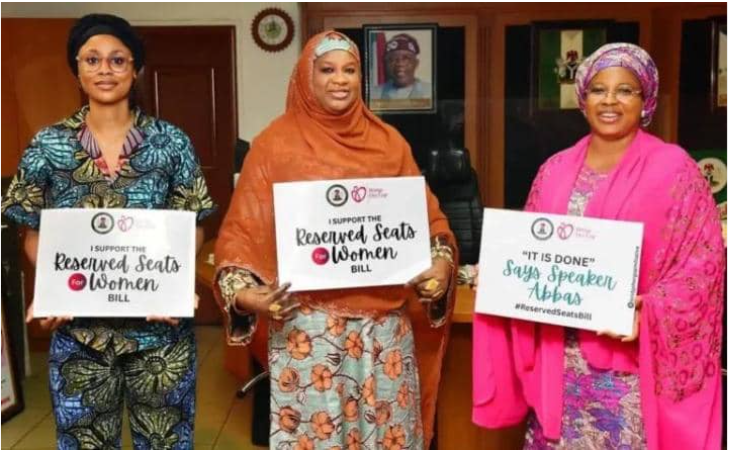
Nigeria's National Assembly is considering a proposal to create 74 additional legislative seats reserved exclusively for women as part of efforts to improve female representation in the country's political system.
The proposed constitutional amendment would introduce 37 additional seats in the Senate and another 37 in the House of Representatives. If approved, each of Nigeria's 36 states and the Federal Capital Territory (FCT) would receive one additional seat in each chamber.
Senate Leader, Senator Opeyemi Bamidele, disclosed the proposal on Monday, November 2, 2026, during the 2026 Law Week organised by the International Federation of Women Lawyers (FIDA), Ekiti State Chapter.
Bamidele, who is also Vice Chairman of the Senate Committee on the Review of the 1999 Constitution, explained that the proposal forms part of the ongoing constitutional amendment process aimed at expanding women's participation in governance.
How the Proposed 74 Seats Would Work
According to Bamidele, the proposal would introduce additional seats without removing or displacing existing elected representatives.
The arrangement would give each state and the FCT one additional representative in the Senate and one in the House of Representatives, with the positions specifically reserved for women.
Beyond the federal legislature, the Constitution Review Committee has also proposed three additional seats for women in each of Nigeria's 36 State Houses of Assembly.
This would create another 108 proposed seats across the state legislatures.
The initiative is intended to provide more opportunities for women to participate directly in legislative debates, lawmaking and decisions affecting their communities.
Bamidele Explains the 16-Year Arrangement
Speaking about the duration of the proposed reform, Bamidele disclosed that the special seats arrangement would operate for 16 years, covering four electoral cycles, before undergoing a comprehensive review.
He described the proposed time limit as a sunset clause designed to provide an opportunity to assess the effectiveness of the arrangement and encourage broader political inclusion.
The Senate Leader also explained that the proposal followed consultations and discussions among stakeholders involved in the constitutional review process.
He maintained that the initiative was not intended to displace existing constituencies but to create additional opportunities for women within Nigeria's legislative institutions.
Constitutional Approval Still Required
Although the proposal has attracted public attention, it has not yet become law.
Under Section 9 of Nigeria's 1999 Constitution, a constitutional amendment generally requires the support of at least two-thirds of all members of each chamber of the National Assembly and approval through resolutions by at least two-thirds of the State Houses of Assembly.
This means the proposal must successfully pass through the necessary legislative and state-level approval processes before it can be implemented.
Bamidele disclosed that lawmakers were already engaging with State Houses of Assembly to secure the required support.
The success of the proposal will therefore depend on the outcome of these legislative procedures.
Debate Over Women's Political Representation
The proposal comes amid longstanding concerns about the limited number of women occupying elected political positions in Nigeria.
Women make up nearly half of the country's population but remain significantly underrepresented in the National Assembly and other political institutions.
Supporters of reserved legislative seats argue that the arrangement could help address barriers such as expensive election campaigns, limited access to political party structures, discrimination and other challenges facing female candidates.
However, questions have also been raised about the implementation of reserved seats, the selection process and whether additional legislative positions should be accompanied by wider political reforms.
Some observers argue that improving women's representation requires more than creating additional seats, pointing to the importance of equal opportunities within political parties and electoral processes.
What the Proposal Could Mean for Nigerian Politics
If approved, the proposed amendment would introduce a new arrangement into Nigeria's legislative structure and create additional opportunities for women to participate in national and state-level decision-making.
It could also increase the number of legislators involved in considering policies relating to education, healthcare, economic development, security and social protection.
Nevertheless, the actual impact would depend on how the reserved seats are implemented, the quality of representation and the ability of elected lawmakers to contribute effectively to legislative activities.
For now, the proposal remains part of the ongoing constitutional review process, with attention focused on the National Assembly and the State Houses of Assembly.
The coming legislative discussions will determine whether the proposed 74 additional federal seats and the reserved positions in state legislatures receive the constitutional approval required for implementation.
Follow AfriView
Don’t Miss the Next Big Story
Enjoyed this story? Stay connected with AfriView for the latest breaking news, trending stories and important updates from Nigeria, Africa and around the world.