PoliticsBlog & FeaturesEconomy
Crisis and Conflict: Nairobi Building Collapse and Iran–US Naval Tensions
Rescue teams search for missing people after a Nairobi building collapse as rising Iran–US naval tensions threaten security around a vital global oil route.
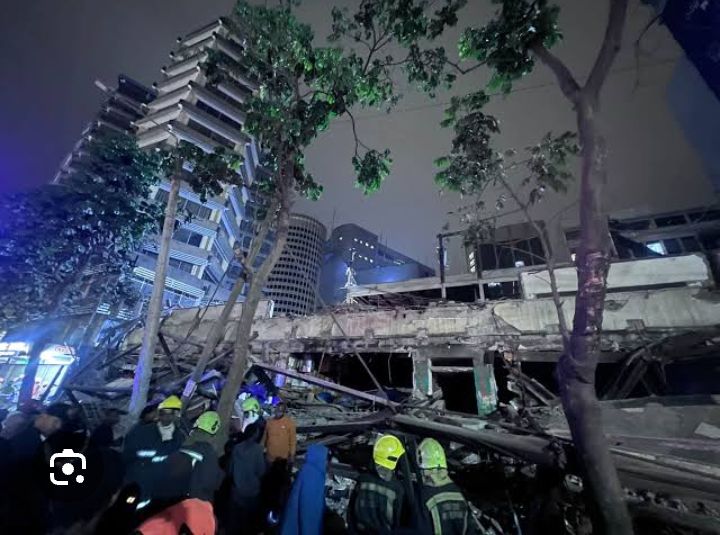
CRISIS AND CONFLICT: NAIROBI BUILDING COLLAPSE AND IRAN–US NAVAL TENSIONS
A deadly building collapse in Nairobi and renewed military threats from Iran have raised concerns about public safety, regulatory oversight and security near a major global oil route.
NAIROBI BUILDING COLLAPSE
Rescue teams continued searching the rubble on Saturday after a multi-storey building under construction collapsed on Friday, 23 October, in Eastleigh, a commercial district of Kenya’s capital. The building, reported to be between 16 and 18 storeys high, fell near shops, raising fears people remained trapped beneath rubble.
Kenya’s Interior Cabinet Secretary, Kipchumba Murkomen, said 67 construction workers had been at the site. Officials reported that 66 escaped unharmed and one was injured. Seven people believed to have been inside nearby shops and the basement were reported missing. The Kenya Red Cross received additional missing-person reports requiring verification.
The rescue operation involved the Kenya Defence Forces, police, Nairobi County authorities and the Kenya Red Cross. Debris and crowds complicated efforts. Police reportedly used tear gas to disperse looters and maintain access for emergency workers.
The disaster renewed scrutiny of building safety. Governor Johnson Sakaja said the development lacked an occupation certificate, while county records reportedly indicated that an application for a building exceeding 15 floors had not been approved. Investigators must establish the cause and determine whether construction failures or regulatory lapses contributed to the collapse.
IRAN–US NAVAL TENSIONS
Meanwhile, tensions in the Persian Gulf intensified after Major General Ali Abdollahi, chief of staff of Iran’s armed forces, warned that American military vessels would not be allowed to re-enter the Gulf. His remarks came amid maritime incidents and confrontation.
Iran’s Islamic Revolutionary Guard Corps claimed that two oil supertankers carrying more than 4.5 million barrels of crude struck naval mines near the Strait of Hormuz. These claims have not been independently verified. The strategic waterway is vital to global energy supplies, making disruption a concern for shipping and oil markets.
Disruptions could increase transportation costs, raise energy prices and threaten international trade. Iranian officials have also warned of retaliation if Western or Israeli attacks target the country’s nuclear, missile or energy infrastructure.
Reports have additionally described threats to disrupt undersea communications cables in the Gulf. Any interference could affect international connectivity, although the feasibility and extent of disruption remain uncertain. Governments and shipping operators are monitoring developments.
A CALL FOR ACCOUNTABILITY AND RESTRAINT
Although these developments differ, both demonstrate how crises can produce consequences beyond their immediate locations.
In Nairobi, authorities must prioritise locating missing people, supporting affected families and conducting a transparent investigation. Enforcing building regulations and improving construction oversight could help prevent similar tragedies.
In the Gulf, diplomatic engagement, clear communication and military restraint are essential to reduce the risk of miscalculation. Any escalation could threaten maritime security, disrupt energy supplies and affect economies worldwide.
As rescue workers continue searching and regional tensions persist, accurate information remains essential. Authorities must prioritise human life, accountability and practical measures to prevent further harm. Check reports and official updates before sharing unverified claims as facts.
Sources and references
Follow AfriView
Don’t Miss the Next Big Story
Enjoyed this story? Stay connected with AfriView for the latest breaking news, trending stories and important updates from Nigeria, Africa and around the world.