IFC Invests $100 Million in Banque du Caire IPO to Expand Business Financing in Egypt
The World Bank Group’s private-sector arm is acquiring an approximately seven per cent stake in the Egyptian bank as the country seeks to improve access to finance for small businesses.
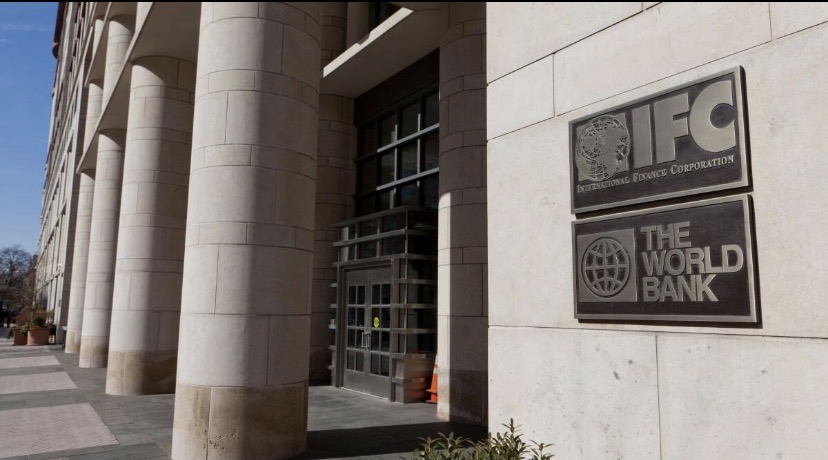
The International Finance Corporation (IFC), the private-sector investment arm of the World Bank Group, has announced a $100 million investment in Egypt’s Banque du Caire initial public offering, acquiring an approximately seven per cent equity stake in the financial institution.
The investment, announced on November 2, 2026, forms part of efforts to strengthen the Egyptian banking sector and expand access to financing for businesses and households.
The development is particularly significant for Egypt’s micro, small and medium-sized enterprises (MSMEs), which play an important role in the country’s economy but continue to face difficulties obtaining the financing needed to expand their operations.
According to the IFC, these businesses contribute more than one-third of Egypt’s gross domestic product and employ almost 40 per cent of its workforce.
Despite their economic importance, many smaller enterprises struggle with limited access to affordable credit, restricting their ability to invest, create jobs and compete in larger markets.
The IFC’s participation in the IPO is expected to support Banque du Caire’s capacity to increase lending to these businesses.
What the investment means for Banque du Caire
Banque du Caire is one of Egypt’s established financial institutions, with a customer base extending beyond the country’s capital.
More than three-quarters of its customers are located outside Cairo, giving the bank an important presence among businesses and households in different parts of the country.
With the new investment, the bank has outlined plans to significantly expand its lending operations by 2030.
Its customer financing base is expected to increase from approximately 899,000 to 1.9 million customers.
Total lending is also projected to rise from approximately $5 billion to $8.9 billion.
These targets reflect the bank’s ambition to expand its reach, particularly among smaller businesses that may not have access to the same financial opportunities as larger companies.
For small enterprises, access to financing can determine whether a business remains at its current size or expands into new markets.
Loans can help business owners purchase equipment, increase production, employ additional workers and improve their distribution networks.
The challenge, however, is ensuring that financing is accessible on reasonable terms and that businesses can manage repayment obligations.
Why are international development institutions investing?
The IFC’s investment is not an isolated financial transaction.
It forms part of a wider strategy by international development institutions to encourage private-sector participation in emerging economies.
Governments in many developing countries face competing demands for public spending, making private investment an important source of capital for infrastructure, businesses and employment creation.
By investing in financial institutions, development organisations can help strengthen the systems through which money reaches businesses and households.
The European Bank for Reconstruction and Development (EBRD) is also participating in Banque du Caire’s IPO, with a separate $100 million investment.
Together, the two institutions are committing $200 million to the offering.
The EBRD’s participation is expected to support the bank’s transition towards stronger listed-company standards, including improvements in corporate governance, digitalisation and cybersecurity.
The involvement of both institutions also demonstrates the importance of institutional investors in supporting financial sector development.
Egypt’s wider economic ambitions
Egypt has been seeking to attract more private investment as it works to strengthen economic growth, improve employment opportunities and reduce pressure on public finances.
A stronger banking sector can contribute to these objectives by providing businesses with access to capital and encouraging investment in productive activities.
The IFC has maintained a partnership with Egypt for approximately five decades.
In 2024, it committed $50 million to Banque du Caire to support lending to micro, small and medium-sized enterprises. Half of that financing was dedicated to women-owned businesses through a five-year loan arrangement.
It also signed a separate $50 million trade finance guarantee facility with the bank.
The latest IPO investment therefore builds on an existing relationship rather than introducing an entirely new partnership.
For Egyptian women entrepreneurs and small business owners outside major commercial centres, the expansion of financing could create additional opportunities, although the actual impact will depend on how the bank implements its lending targets.
What African economies can learn
The investment also offers a broader lesson for other African economies.
Across the continent, small businesses account for a substantial share of economic activity and employment. Yet many continue to operate without adequate access to formal financing.
Business owners frequently rely on personal savings, family support and informal borrowing to sustain their operations.
While these sources can help businesses survive, they are often insufficient for major expansion.
Strengthening financial institutions, improving credit systems and encouraging responsible investment can help address some of these barriers.
However, increasing the amount of money available to banks is only part of the solution. Businesses must also be able to meet lending requirements, understand financing terms and operate in an environment that supports growth.
For Banque du Caire, the success of the IPO will ultimately be measured not only by investor participation but also by whether more businesses can access financing and translate it into sustainable economic opportunities.
The $100 million IFC investment represents an important step in that direction, placing financial inclusion and private-sector growth at the centre of Egypt’s banking ambitions.
Follow AfriView
Don’t Miss the Next Big Story
Enjoyed this story? Stay connected with AfriView for the latest breaking news, trending stories and important updates from Nigeria, Africa and around the world.