Spanish Transport Minister Resigns Days After Deadly Train Crash
Spain’s transport minister steps down following a devastating train collision that killed 69 people and raised serious questions about railway safety.
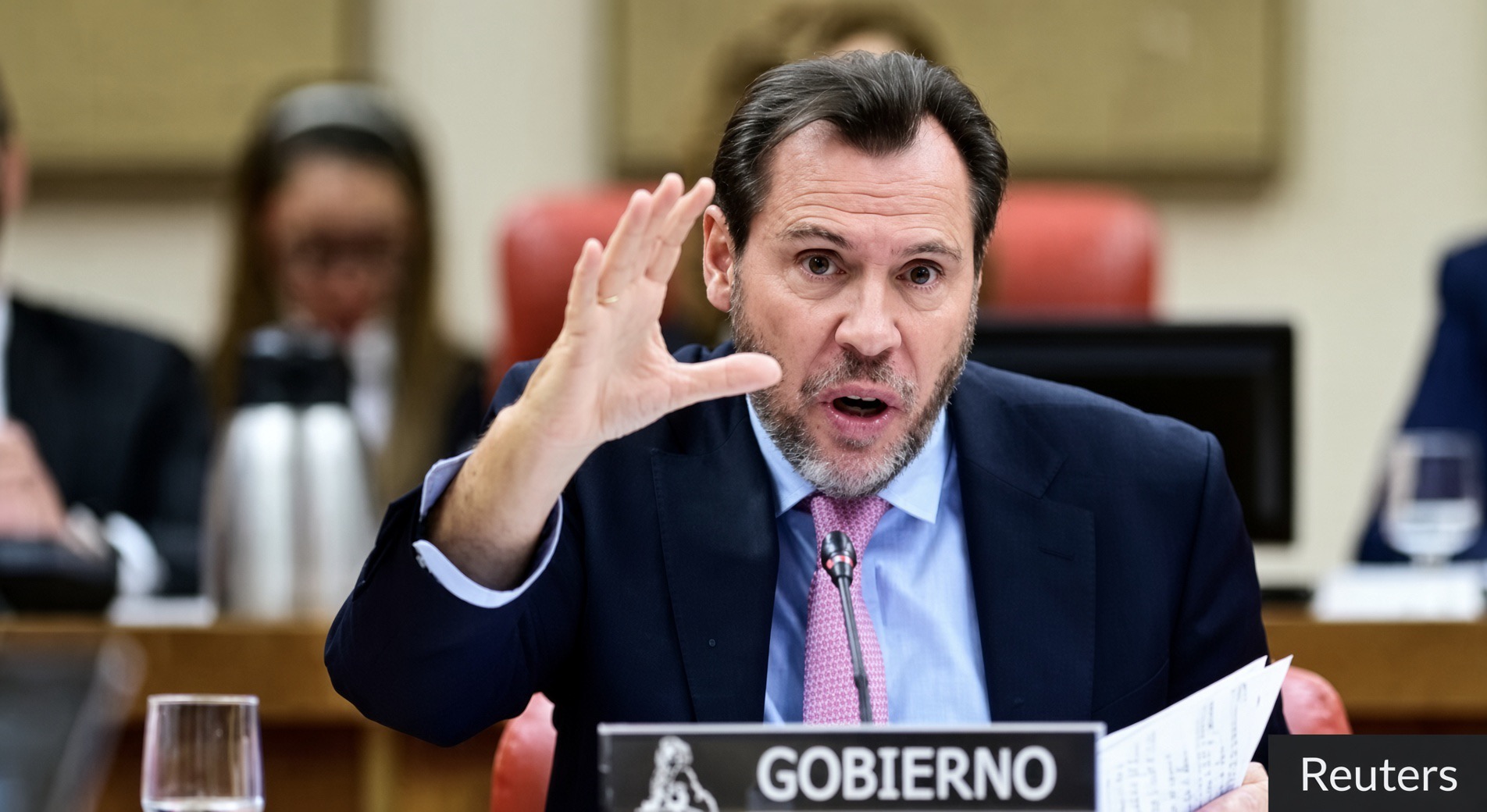
Spain’s Transport Minister Óscar Puente has resigned following a devastating high-speed train collision that killed 69 people and injured dozens more, intensifying pressure on the country’s government over railway safety.
Puente announced his resignation on Tuesday, November 3, 2026, six days after the deadly crash near Urda, south of Madrid. He made the announcement during a parliamentary appearance in which he faced questions about the disaster and the government’s response.
The accident, which occurred on October 28, involved a state-operated Renfe train that struck a stationary train operated by private company Iryo. The collision has become one of Spain’s deadliest railway disasters in decades and has raised serious concerns about the safety of the country’s high-speed rail network.
Minister Takes Political Responsibility
Addressing lawmakers, Puente said he could not remain in office after two major railway accidents within less than a year.
He also confirmed that he was withdrawing from the candidate lists for Spain’s upcoming early general election, scheduled for November 29.
The minister said he had decided to resign shortly after learning of the latest crash but remained in office to oversee the immediate emergency response, support the investigation and introduce initial safety and compensation measures.
His resignation came after mounting pressure from opposition parties and railway unions, who questioned the government’s handling of railway safety and demanded accountability.
Prime Minister Pedro Sánchez praised Puente for his service, saying he had prioritised the victims and acted out of political responsibility.
What Happened in the Deadly Collision?
The crash occurred on the Madrid-Seville high-speed railway line near the town of Urda in central Spain.
According to preliminary accounts, a failure in a signalling and communications system caused several trains to stop. Railway controllers in Madrid then took over traffic management.
Investigators are examining why a Renfe train was authorised to continue its journey despite another train remaining stationary ahead.
The Renfe train subsequently struck the rear of the Iryo train at an estimated speed of between 160 and 200 kilometres per hour, according to information released during the investigation.
The impact caused extensive damage to the trains and left passengers trapped inside wrecked carriages. Emergency workers, firefighters and medical teams rushed to the scene to rescue survivors and transport the injured to hospitals.
Authorities launched an investigation into the technical failures and decisions that preceded the collision. The inquiry is expected to examine the signalling system, communications between train drivers and controllers, and the procedures used when automatic safety equipment fails.
Second Major Railway Disaster This Year
The October tragedy was the second deadly high-speed train accident on the Madrid-Seville line in 2026.
In January, another collision in southern Spain killed 46 people. That accident also raised questions about railway infrastructure and safety procedures.
The two disasters have shaken public confidence in Spain’s railway system, which is widely regarded as one of the most extensive high-speed networks in the world.
Before this year, Spain had gone more than three decades without a fatal accident on its high-speed rail network.
The latest crash has renewed scrutiny of investment in railway maintenance, the condition of older signalling equipment and the growing demands placed on railway control centres.
Railway unions have also raised concerns about staffing levels, fatigue and working conditions among employees responsible for managing train movements.
Government Announces New Safety Measures
Before announcing his resignation, Puente outlined a series of measures intended to prevent further accidents and restore confidence in the railway system.
The government plans to reduce train services on the affected line while safety reviews and improvements are carried out.
Additional measures include introducing stricter speed limits when automatic signalling systems fail, improving working conditions in railway control centres and accelerating the rollout of the European Rail Traffic Management System.
Authorities are also considering the use of artificial intelligence to monitor communications between train drivers and controllers and identify unusual situations that could threaten safety.
The government has pledged financial assistance to victims and their families, including increased compensation payments and faster processing of claims.
Officials say the measures are intended to address both technical weaknesses and human factors that may contribute to railway accidents.
Political Consequences Ahead of Election
Puente’s resignation comes at a sensitive moment for Spain’s Socialist-led government, with the November 29 election approaching.
The deadly collision has become a major political issue, with opposition parties demanding explanations about railway safety and the government’s responsibility for the disaster.
The resignation may ease some pressure on the administration, but questions remain about whether the measures announced will be sufficient to prevent future tragedies.
For the families of those killed and injured, the priority remains understanding how the collision happened and ensuring that similar accidents do not occur again.
As investigators continue their work, Spain faces the difficult task of restoring public trust in a railway system that has long been considered a symbol of the country’s modern infrastructure.
Follow AfriView
Don’t Miss the Next Big Story
Enjoyed this story? Stay connected with AfriView for the latest breaking news, trending stories and important updates from Nigeria, Africa and around the world.