FG Sets 24-Month Deadline to Complete Nigeria's Abandoned National Library Project
The Federal Government says construction activities have resumed at the Abuja headquarters, with a renewed funding commitment and November 19 flag-off planned to prevent another prolonged delay.
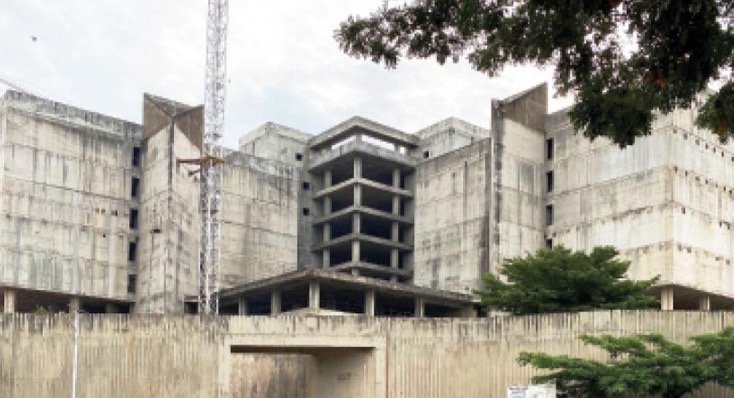
The Federal Government has promised to complete the long-abandoned headquarters of the National Library of Nigeria in Abuja within 24 months, renewing efforts to deliver a national educational infrastructure project that has remained unfinished for nearly two decades.
The Minister of Education, Dr Tunji Alausa, gave the assurance on Thursday, November 5, during an inspection visit to the construction site ahead of the formal flag-off of the project’s return to site by First Lady Oluremi Tinubu, scheduled for November 19, 2026.
According to the minister, contractors have mobilised to the site and commenced construction activities, while the Federal Ministry of Education has introduced measures to ensure that funding and administrative challenges do not interrupt the project again.
Alausa said the government was committed to sustaining construction until the facility is completed and commissioned, warning contractors and consultants against delays.
He also assured the companies handling the project that payment requests would be processed promptly to prevent financial bottlenecks from affecting construction.
A national project abandoned for nearly two decades
The National Library headquarters project has experienced a lengthy history of delays, funding difficulties and changes in construction costs.
Although the institution was established in 1964, the Abuja headquarters was conceived in 1981, with construction officially commencing on April 29, 2006, under the administration of former President Olusegun Obasanjo.
The project was initially awarded to Reynolds Construction Company (RCC) at a cost of approximately ₦8.59 billion, with an expected completion period of about 22 months.
However, the original delivery timeline was not achieved. Funding difficulties, contract variations and disagreements over the cost of completing the facility contributed to its prolonged delay.
Although the building was substantially completed to a certain stage in 2008, construction activities were subsequently halted. The facility remained unfinished through successive administrations, becoming one of Nigeria’s most prominent examples of abandoned public infrastructure.
The renewed construction efforts are therefore intended to bring an end to years of uncertainty surrounding a project expected to play an important role in the country’s educational and cultural development.
Government approves fresh funding for completion
The latest intervention follows the Federal Executive Council’s approval of ₦118.309 billion in August 2026 for the augmentation of the existing construction contract.
An additional ₦37 billion was also reported as funding for furnishing and equipping the facility, bringing the combined funding requirement to approximately ₦155.309 billion.
The renewed funding arrangement involves government resources and support from the Tertiary Education Trust Fund (TETFund).
The First Lady has also been credited with helping mobilise additional contributions towards the project through her 65th birthday fundraising initiative, with funds reportedly directed towards its completion.
The government says the funding arrangements are intended to address previous financial difficulties and ensure that construction and furnishing activities can progress without unnecessary interruptions.
What Nigerians should expect from the completed library
Beyond serving as a national collection of books and publications, the proposed headquarters is expected to function as a major educational, research and cultural centre.
According to Alausa, the facility will provide spaces for international conferences, research activities, exhibitions and access to Nigeria’s historical archives and cultural heritage.
The government also plans to incorporate specialised facilities for children and persons with disabilities, including individuals with visual and hearing impairments.
The proposed inclusive design is expected to improve access to educational resources and make the institution more accessible to different categories of users.
The project is also expected to support the preservation of Nigeria’s documentary heritage by providing modern facilities for collecting, storing and accessing published materials and historical records.
If properly equipped and maintained, the headquarters could strengthen the National Library’s capacity to support researchers, students, academics, writers and other members of the public.
Contractors face pressure to meet delivery targets
During the inspection, Alausa emphasised that the government would not tolerate another prolonged interruption to construction.
He urged contractors and consultants to report payment delays or administrative difficulties directly to the ministry, stressing that the government had established processes to facilitate prompt payments.
The Managing Director of Reynolds Construction Company, Nader Yusuf, reaffirmed the company’s commitment to delivering the construction component of the project.
While the Federal Government has stated a 24-month completion target, RCC indicated that it intends to complete its construction responsibilities within 18 months.
The different timelines reflect the government’s broader completion commitment and the contractor’s stated construction schedule.
The minister also acknowledged the company’s efforts to maintain security and protect the existing infrastructure during the period of inactivity.
Beyond completing another abandoned government project
The renewed commitment to the National Library raises a broader question about the management of public infrastructure and the importance of sustaining government projects beyond individual administrations.
For nearly two decades, the unfinished headquarters has represented the consequences of prolonged delays in executing projects intended to serve the public.
Its completion would provide more than an additional government building. It would create an important national institution for preserving knowledge, supporting academic development and improving access to information.
However, the success of the renewed intervention will depend not only on completing the physical structure but also on ensuring that the facility is properly equipped, adequately funded and effectively managed.
As the Federal Government prepares for the November 19 formal flag-off, attention will increasingly turn to whether the renewed funding arrangements and construction timelines can finally deliver the National Library headquarters.
For students, researchers and future generations, the significance of the project lies in what the completed institution will make possible: wider access to knowledge, stronger research infrastructure and better preservation of Nigeria’s intellectual heritage.
Follow AfriView
Don’t Miss the Next Big Story
Enjoyed this story? Stay connected with AfriView for the latest breaking news, trending stories and important updates from Nigeria, Africa and around the world.