WHO-Backed Ebola Vaccine Trial Begins in DR Congo Amid Deadly Outbreak
The TUMAINI trial launched in Ituri province will assess vaccine candidates against the Bundibugyo strain, for which no approved vaccine is currently available.
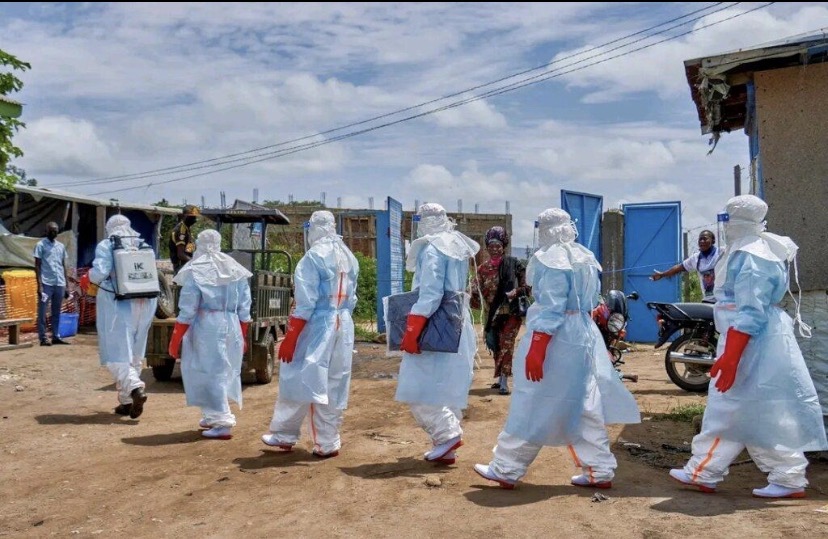
The World Health Organization (WHO) has announced the start of a clinical trial to assess vaccine candidates against the Bundibugyo strain of Ebola in the Democratic Republic of the Congo (DR Congo), as health authorities intensify efforts to control the outbreak.
The trial, known as TUMAINI, began on October 23, 2026, in Bunia, the capital of Ituri province, where the outbreak has caused a substantial number of infections and deaths.
According to the WHO’s October 23 outbreak update, the study is intended to generate evidence on vaccine candidates that could help protect people against Bundibugyo virus disease and reduce the risk of future outbreaks.
The trial is a Phase 2/3 clinical study, marking an important step in efforts to evaluate potential protection against a virus for which no licensed vaccine is currently available.
Outbreak continues to affect thousands
The vaccine trial comes as the outbreak continues to place pressure on health services in DR Congo.
The WHO reported that, as of October 20, a total of 9,704 confirmed cases and 4,687 deaths had been recorded across 66 health zones in eight provinces of the country.
Ituri remained the most affected province, with 7,040 confirmed cases and 3,271 deaths reported by the same date.
The WHO also noted that infections had been reported across several provinces, highlighting the geographic spread of the outbreak and the challenges facing response teams.
The high number of deaths occurring within communities has raised concerns about delays in identifying cases and obtaining timely medical care.
Health authorities and response partners have therefore continued to strengthen surveillance, case investigation, contact tracing and infection-prevention measures.
Why the vaccine trial matters
Bundibugyo virus is a distinct type of Ebola virus. Although vaccines have been developed against another strain, known as the Zaire strain, there is currently no licensed vaccine specifically approved for preventing Bundibugyo virus disease.
The WHO says the available evidence is insufficient to establish whether the licensed Ervebo vaccine provides meaningful protection against Bundibugyo virus in humans.
The TUMAINI trial is intended to help address this evidence gap by assessing candidate vaccines through clinical research.
The organisation is supporting the trial with technical, scientific and operational expertise, working alongside other partners.
The results could help researchers and public-health authorities understand which vaccine candidates offer protection and how they might be used in future outbreak responses.
However, the launch of the trial does not mean an effective vaccine against this particular strain has already been confirmed. Researchers must evaluate the candidates and analyse the results before drawing conclusions about their safety and effectiveness.
Nigeria and Kenya report imported cases
The outbreak has also raised concerns beyond DR Congo, with the WHO reporting imported cases in Nigeria and Kenya.
Nigeria’s Federal Ministry of Health and Social Welfare confirmed one case of Ebola disease in the Federal Capital Territory on October 20, following laboratory confirmation.
The ministry said the patient was a woman who had recently arrived in Nigeria on an international flight from Uganda. She was admitted to a private hospital in the FCT, where she received care before the diagnosis was confirmed.
At the time of the announcement, the patient was in isolation and receiving medical care.
The federal government said contact tracing had begun, with 44 close contacts identified at that stage. Public-health teams were working to identify and monitor people who might have been exposed, including healthcare workers, patients, caregivers and travel contacts.
The Nigeria Centre for Disease Control and Prevention activated the national and state incident-management system to coordinate the response.
The WHO said it was working with Nigerian health authorities and partners on case investigation, contact tracing, infection prevention and control, and the provision of essential supplies for healthcare workers.
Kenya has also reported an imported case, prompting its authorities to introduce public-health measures and monitor contacts.
Public-health measures remain essential
While vaccine research continues, the WHO has emphasised that vaccination is only one part of a comprehensive response to Ebola outbreaks.
Other important measures include early detection, laboratory testing, prompt isolation and treatment, infection prevention in healthcare facilities, contact tracing and community engagement.
Healthcare workers are particularly important to outbreak control because they may face increased exposure when caring for suspected or confirmed cases. Appropriate protective equipment and infection-prevention procedures are therefore essential.
The WHO has also advised against imposing travel or trade restrictions on affected countries, noting that such restrictions are not recommended as a response to the current outbreak.
The TUMAINI trial is expected to contribute evidence that may guide future decisions on protection against Bundibugyo virus disease.
For now, health authorities continue to focus on identifying cases, tracing contacts, improving access to care and limiting further transmission.
The WHO’s latest figures underline the seriousness of the outbreak, while the start of the trial represents a research milestone in the search for additional tools to control it.
The effectiveness of the vaccine candidates remains to be established through clinical research, making continued surveillance and established public-health measures essential while the trial proceeds.
Follow AfriView
Don’t Miss the Next Big Story
Enjoyed this story? Stay connected with AfriView for the latest breaking news, trending stories and important updates from Nigeria, Africa and around the world.