Cost of living
Nigeria’s 90-Day Economic Plan Targets High Food Prices and Cost-of-Living Pressures
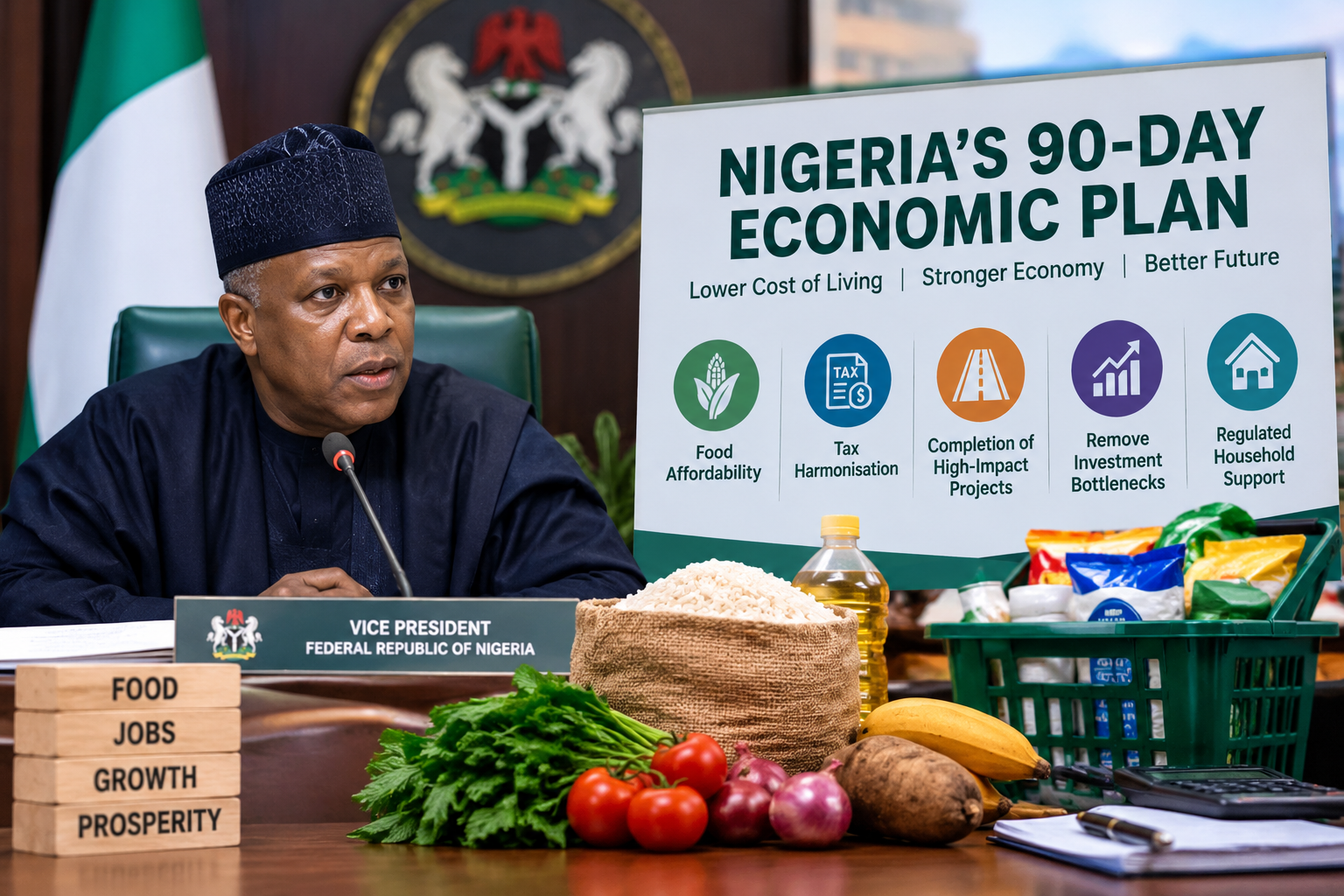
Nigeria’s 90-Day Economic Plan Targets High Food Prices and Cost-of-Living Pressures.
ABUJA, Nigeria — October 23, 2026 Nigeria’s National Economic Council (NEC) has endorsed a 90-day economic action plan aimed at reducing the cost of living, improving food affordability and ensuring that the benefits of ongoing economic reforms reach households and businesses across the country. The plan was presented by the Minister of Finance and Coordinating Minister of the Economy, Taiwo Oyedele, during the council’s 161st meeting, held virtually on Thursday and chaired by Vice President Kashim Shettima. According to a statement from the Office of the Vice President, the initiative is designed to strengthen the gains of President Bola Tinubu’s economic reform programme while addressing the difficulties Nigerians continue to face in their daily lives. Five Priority Areas Identified The 90-day action plan focuses on five major areas: food affordability, tax harmonisation, completion of high-impact projects, removal of investment bottlenecks and regulated household support. Food affordability is a central priority, reflecting the importance of food prices to household budgets. The government is also seeking to remove obstacles that discourage investment and economic activity, with the broader objective of improving conditions for businesses and consumers. Tax harmonisation is another component of the initiative. The plan also emphasises completing projects expected to deliver direct benefits to citizens. However, the public announcement did not provide a detailed breakdown of the measures to be implemented, their individual costs or the specific targets expected to be achieved within the 90-day period. Government Seeks Measurable Results During the meeting, Shettima urged state governors and relevant government institutions to ensure that economic reforms translate into tangible improvements in living standards. He highlighted affordable transportation, improved healthcare, employment opportunities and greater financial security as important outcomes Nigerians should experience. The council also approved the establishment of a national dashboard to track ongoing projects across the country. The proposed monitoring system is expected to strengthen transparency and accountability, particularly in reporting how funds saved through the removal of the petrol subsidy are utilised. The initiative could provide a mechanism for monitoring public projects and assessing whether government spending delivers the intended benefits. The finance minister also identified reducing headline inflation and interest rates to single digits by 2027 as key policy objectives. Achieving these goals will require coordination among federal and state governments, alongside measures designed to encourage investment and improve economic activity. Implementation Remains Critical Despite the council’s endorsement, the effectiveness of the 90-day plan will depend on its implementation and the specific measures adopted by the relevant authorities. The public announcement has yet to outline a comprehensive implementation timetable, detailed funding arrangements or measurable targets showing how much food prices and other household expenses are expected to decline. This leaves important questions about how quickly Nigerians might experience relief and how the government intends to assess progress throughout the 90-day period. The plan also places responsibility on state governments to support national economic objectives while responding to conditions within their respective jurisdictions. Coordination will therefore be important in ensuring that the initiative produces consistent results across the country. Nigerians Await the Impact For households struggling to manage food, transportation, healthcare and other essential expenses, the proposed plan represents another government effort to address economic hardship. Its success, however, will ultimately depend on whether the announced priorities translate into practical improvements in purchasing power and access to essential services. As implementation details emerge, attention is likely to focus on the steps taken by federal and state authorities, the progress recorded within the 90-day period and the extent to which ordinary Nigerians benefit. For now, the council’s endorsement marks a policy commitment. Whether that commitment produces meaningful relief will depend on the actions that follow. END
Follow AfriView
Don’t Miss the Next Big Story
Enjoyed this story? Stay connected with AfriView for the latest breaking news, trending stories and important updates from Nigeria, Africa and around the world.