2027: Violence threatening polls ‘Tinubu must come’, ‘Tinubu must go’ supporters clash

Parties lament raging danger to members’ lives From Lagos to Enugu, Edo, Rivers, Kogi, Adamawa, meetings, rallies under attack *Opposition alleges killings, gunfire, assaults, destruction of party offices *INEC activates early-warning mechanism; reputation experts warn of investment losses *2023 election violence haunts preparations for next polls.
WITH the 2027 general elections approaching, political violence, threats and hate speech are raising fresh concerns about the safety of politicians, party members and voters, as rival camps increasingly accuse one another of using intimidation to gain electoral advantage.
From Lagos to Enugu, Edo, Rivers, Kogi, Cross River, Adamawa and other parts of the country, political parties have reported attacks on meetings, rallies, campaign facilities and supporters, while allegations of threats against political opponents have intensified the atmosphere of apprehension ahead of the polls.
In Lagos, more than 100 suspected hoodlums reportedly invaded the Labour Party,LP, secretariat at Idimu, Alimosho LGA, during a defection ceremony involving members moving to the African Democratic Congress, ADC. Furniture and party flags were destroyed, while members sustained injuries. When the gathering relocated to Eco Centre Hall in Egbeda, it was reportedly attacked again.
In Enugu, gunmen allegedly disrupted political gatherings, while opposition parties in Kogi said attacks on ward meetings left members hospitalised. In Rivers, the ADC reported the killing of a member preparing for a political meeting. In Cross River, the Peoples Democratic Party, PDP, alleged that gunmen attacked two consultation venues, injuring three people.
The violence has also touched gatherings associated with the ruling All Progressives Congress, APC. In May, violence reportedly erupted during the party’s House of Assembly primary in Kosofe, Lagos, while vehicles belonging to PDP members were vandalised at a candidate affirmation event in Bauchi.
In Adamawa, supporters of President Bola Tinubu’s second-term ambition, associated with the slogan “Tinubu Must Come”, reportedly clashed with members of the opposing “Tinubu Must Go” movement during a rally in the Jimeta axis of Yola.
The incidents, spanning different parties and regions, raise questions about the capacity of security agencies to protect political activities, investigate attacks impartially and prevent local disputes from escalating into wider violence.
The concerns extend beyond party leaders. Lawyers, journalists, civil society groups, traditional rulers and election officials have warned that intimidation and inflammatory rhetoric could undermine public confidence in the electoral process.
Pattern of attacks across states
At a press conference in Abuja on September 22, the ADC said it had documented attacks and intimidation involving its members in at least nine states between July 2025 and September 2026: Kaduna, Kebbi, Ekiti, Cross River, Rivers, Edo, Osun, Kogi and Enugu.
The party’s National Publicity Secretary, Mallam Bolaji Abdullahi, cited attacks on party gatherings, assaults on members and threats allegedly directed at opposition politicians.
In February, according to the ADC, the party’s secretariat in Benin City, Edo State, was attacked during a political gathering. Gunfire was also reportedly heard at the residence of former Edo State governor and former APC National Chairman, Chief John Odigie-Oyegun, where political leaders had assembled.
The Edo State Police Command confirmed the incident and ordered an investigation. The ADC complained that no arrests, prosecutions or public report had followed at the time of its statement.
In Rivers State, the party alleged that a member identified as Kamadiyoi was killed in Community Ward 1, Abua/Odual Local Government Area, while preparing for a meeting.
In Enugu State, an opposition gathering was reportedly disrupted by armed men, with police confirming that a man sustained a gunshot injury. The state government disputed claims that a life had been lost in the incident.
The ADC also cited the disruption of an NDC gathering at Akanu Ibiam International Airport, where supporters had assembled to receive their governorship candidate. The government said the Federal Airports Authority of Nigeria’s permission had not been obtained for the gathering.
The Enugu chapter of the ADC, through the Obodoeze Media Project, described the reported use of firearms in a political environment as a serious threat to public safety and demanded a thorough, impartial investigation.
Three opposition governorship candidates in the state — Uche Nnaji of the PDP, Christian Ohaa of the NDC and Ozor Obodoeze Ocho of the ADC — jointly demanded an independent investigation by the Inspector-General of Police, Tunji Disu, with substantial representation from outside the Enugu State Police Command.
Timeline of attacks, clashes, disruptions May–October 2026
1. Date: May 18, 2026 Location: Osogbo, Osun
Incident and reported impact: Accord alleged that armed men attacked Governor Ademola Adeleke’s campaign office and the party secretariat, damaging windows and offices.
2. Date: May 21, 2026 Location: Kosofe, Lagos
Incident and reported impact: Violence marred the APC House of Assembly primary at Ikosi Senior High School. Supporters of aspirant Femi Saheed alleged that armed hoodlums attacked members, leaving several injured.
3. Date: May 26, 2026 Location: Bauchi
Incident and reported impact: Suspected political thugs vandalised vehicles belonging to PDP members at a governorship candidate affirmation event.
4. Date: June 9, 2026 Location: Ile-Ife, Osun
Incident and reported impact: A campaign walk for APC governorship candidate, Bola Oyebamiji, reportedly degenerated into violence around Sabo, leaving about three people injured.
5. Date: July 31, 2026 Location: Ezza South, Ebonyi
Incident and reported impact: Thugs attacked a PDP rally organised for Ifeanyi Nworie. About 10 members were reportedly injured, while canopies, chairs and public-address equipment were destroyed.
6. Date: August 30, 2026 Location: Kuje, FCT
Incident and reported impact: An Accord Party gathering was reportedly attacked by suspected thugs armed with cutlasses. Participants fled, property was damaged and at least one person was reportedly injured.
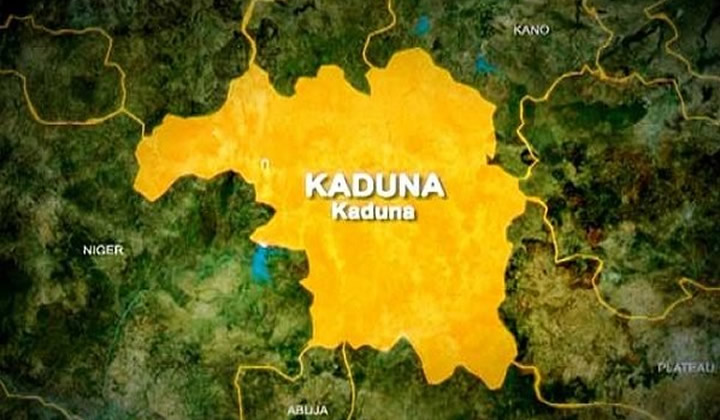
7. Date: September 9, 2026 Location: Kaduna
Incident and reported impact: ADC supporters on a solidarity walk for governorship candidate, Isa Ashiru, were reportedly attacked by suspected thugs.
8. Date: September 12, 2026 Location: Nkanu West, Enugu
Incident and reported impact: An NDC ward meeting at Ndiuno-Obuoffia was reportedly disrupted by gunmen, leaving two attendees injured. Canopies and chairs prepared for a separate PDP rally at Agbani were also reportedly destroyed. Police ordered an investigation.
9. Date: September 14, 2026 Location: Isiokpo, Rivers
Incident and reported impact: An ADC meeting in Ikwerre LGA was reportedly disrupted by suspected political thugs.
10. Date: September 15, 2026 Location: Ejule, Kogi
Incident and reported impact: Suspected thugs reportedly disrupted an ADC meeting in Ofu LGA. The party also alleged attacks on members preparing for meetings in two wards, with several people hospitalised.
11. Date: Mid-September 2026 Location: Abua/Odual, Rivers
Incident and reported impact: The ADC alleged that a member identified as Kamadiyoi was killed while party members prepared for a meeting in Emilaghan community, Ward 1. The attackers’ identities were not independently established.
12. Date: October 2, 2026 Location: Calabar South, Cross River
Incident and reported impact: The PDP alleged that gunmen attacked two consultation venues, injured three people and vandalised supporters’ vehicles.
13. Date: October 6, 2026 Location: Igueben, Edo
Incident and reported impact: The ADC alleged that gunmen attacked a campaign convoy involving Kenneth Imasuangbon and Herbert Okonofua, leaving supporter Jerry Oliha with gunshot wounds. An accused APC-linked council chairman denied involvement.
14. Date: October 14, 2026 Location: Jimeta, Adamawa
Incident and reported impact: A rally supporting Tinubu’s second-term ambition reportedly encountered opposition from “Tinubu Must Go” supporters.
The list is not exhaustive. The ADC has also cited alleged attacks and intimidation in Kebbi and Ekiti.
Threats from political podiums
Beyond physical attacks, statements attributed to public officials and political actors have raised concerns about the atmosphere in which parties are expected to campaign.
In Esan West Local Government Area of Edo State, the council chairman was accused of threatening to demolish hotels that hosted NDC meetings. He was also alleged to have visited Ekpoma motor park and directed that commercial drivers wearing the caps of other parties be barred.
In Kuje Area Council of the Federal Capital Territory, Chairman Danjuma Shekwolo was accused of telling residents who would not vote for the APC to leave the council.
In Borno State, a commissioner was reportedly accused of threatening to cut off the fingers of people who refused to support the APC. In Osun, a senator was reported to have urged supporters to “kill” Accord Party members ahead of the governorship election.
These allegations raise serious questions about the responsibilities of public officials and the protection of citizens’ political rights.
In Rivers State, Minister of the Federal Capital Territory, Nyesom Wike, warned that former governor Rotimi Amaechi “will find it difficult to campaign in Rivers” if he continued describing President Tinubu and his supporters as thieves.
The ADC’s Abdullahi warned against the politicisation of law enforcement.
“The Nigeria police is not APC police; it is the police of the Federal Republic of Nigeria,” he said.
South-East tensions
Elder statesman and Chairman of the Igbo Agenda Dialogue, Chief Chekwas Okorie, warned South-East governors against allowing the region to become a theatre of political conflict. “It is no longer safe for members of opposition parties to hold public gatherings anywhere in the geopolitical zone without being attacked by heavily armed thugs,” he said.
Okorie also accused some governors of charging hundreds of millions of naira for a single campaign billboard, a practice he said could restrict opposition parties’ access to public spaces. He alleged that some opposition groups had responded by tearing down ruling-party billboards.
In Enugu, Secretary to the State Government, Prof. Chidiebere Onyia, accused opposition members of plotting to bring thugs and bandits into the state. He said the government would not allow a national asset such as the airport to be converted into a campaign ground.
The competing claims underscore the need for security agencies to distinguish legitimate security concerns from restrictions that could prevent lawful political activity.
Lessons from Lagos in 2023
Nigeria’s experience during the 2023 general elections offers a warning about the possible consequences of intimidation, identity-based rhetoric and attacks on political opponents. The Centre for Democracy and Development, which deployed observers across all 36 states, reported that intimidation linked to identity or party affiliation occurred in 3.4 per cent of polling units. Lagos, Anambra and Imo featured prominently in its findings.
On February 25, 2023, videos from Surulere, Lagos, showed young men overturning tables, removing ballot boxes marked “Presidential” and smashing them on the road along Adedoyin Road. Ballot papers were scattered into gutters, and INEC later cancelled results in four polling units, affecting 1,950 registered voters.
PDP House of Representatives candidate for Surulere Constituency I, Alani Jeje, popularly known as Bobby Jeje, alleged that thugs moved from one polling unit to another, beating voters.
“They have beaten up people in areas where PDP is very strong. They are doing this right under the watch of the police,” he said.
Actress Chioma Akpotha also said she was attacked at her polling unit. “They destroyed everything including my car side mirrors. I had to run out,” she wrote.
The atmosphere deteriorated further before the March 18 governorship election, when a video of Musiliu Akinsanya, popularly known as MC Oluomo, circulated online. He was heard warning a woman identified as Iya Chukwudi: “If you don’t want to vote for us, stay at home.”
Police urged Nigerians to treat the statement as a joke.
On election day, the European Union Election Observation Mission reported that at least 21 people were killed nationwide. Its Chief Observer, Barry Andrews, identified Lagos as one of the worst-affected states.
In Oke-Afa, Ejigbo, armed men wearing party tags reportedly attempted to seize a Bimodal Voter Accreditation System, BVAS, machine. In Okota, a suspected thug was shot by a policeman while allegedly attempting to snatch a ballot box, while another suspected thug was reported shot dead at Star Time Estate, Ago Palace Way. At Ijagemo, 10 people were reportedly injured when armed men on eight motorcycles invaded polling units. Further reports of intimidation and violence came from Ojo, Eti-Osa, Fadeyi, Ajegunle, Ajah, Festac, Somolu and Berger.
The United States’ 2023 Country Reports on Human Rights Practices said APC supporters in Ojo threatened Igbo voters and that non-Yoruba voters were blocked in Eti-Osa. The US Mission said its observers witnessed voter intimidation in Lagos.
“The use of ethnically charged rhetoric before, during, and after the gubernatorial election in Lagos was particularly concerning,” the Embassy said.
The then Lagos State Commissioner of Police, Idowu Owohunwa, acknowledged that violence had occurred but said it was “not as widespread as to affect the general dynamics.”
Voter turnout, however, stood at 16 per cent, the lowest for a governorship election in the state’s history. Labour Party governorship candidate Gbadebo Rhodes-Vivour later described the experience as a pattern of intimidation and voter suppression. “It’s a culture of violence, and intimidation and voter suppression, and I think that was the main obstacle for me in the 2023 elections,” he said.
The absence of major convictions following many of the reported incidents remains a concern for advocates of electoral accountability.
INEC’s early-warning system faces test
Against this background, INEC Chairman, Prof. Joash Amupitan, SAN, has warned political actors against allowing competition to descend into bloodshed.
Speaking at a workshop for editors in Abuja, Amupitan said: “No political office in this country is worth the blood of a single Nigerian.”
He said the commission had activated an early-warning framework through the Inter-Consultative Committee on Election Security, ICCES, to monitor violence, thuggery and hate speech. “INEC will not stand by and allow political competition to devolve into violence,” he warned.
The commission also announced plans for joint financial-monitoring teams involving the Economic and Financial Crimes Commission, EFCC, the Independent Corrupt Practices and Other Related Offences Commission, ICPC, and the Nigerian Financial Intelligence Unit, NFIU.
INEC said more than 10.6 million new voters had been registered and 57,000 new BVAS devices acquired.
However, the effectiveness of the early-warning framework will depend on whether threats are identified promptly, security agencies act on credible information, and perpetrators face investigation and prosecution regardless of party affiliation.
Monitoring alone may not prevent violence if warnings do not translate into timely deployments, protection for vulnerable gatherings and credible consequences for those who organise or finance attacks.
Nigeria’s reputation at stake
Chairman of the Board of the Nigeria Reputation Management Group, NRMG, Yomi Badejo-Okusanya, has warned that election-related insecurity could damage the country’s international standing and cost it investment opportunities.
Speaking at Nigeria Reputation Day 2026, themed “Own the Narrative: Shaping Nigeria’s Reputation Together,” he disclosed that a prospective international investor cancelled a planned visit following a travel advisory linked to concerns about the forthcoming elections.
“We must have these elections in a peaceful atmosphere. If you don’t win today, you can win tomorrow. It is not winning at all costs that we must all do,” he said.
The warning highlights the wider cost of political violence: beyond injuries, deaths and damaged property, it can discourage investment, weaken confidence in public institutions and undermine the legitimacy of elected governments.
As the 2027 elections approach, the challenge before INEC, the police, political parties and governments at all levels is to ensure that political competition remains peaceful, that citizens can attend meetings without fear, and that allegations of violence are investigated impartially.
The experience in Lagos in 2023 shows the potential consequences when intimidation and inflammatory rhetoric go unchecked. The latest reports suggest that the warning signs are already visible.
The central question is whether Nigeria’s institutions will act early enough to prevent the coming electoral contest from becoming another cycle of violence, fear and impunity.
Follow AfriView
Don’t Miss the Next Big Story
Enjoyed this story? Stay connected with AfriView for the latest breaking news, trending stories and important updates from Nigeria, Africa and around the world.